-
Facing the Unexpected
by Andrea M
Never in my life did I imagine that I would become a military spouse. When I was younger, I thought certain people were made for things like this and I was certainly not one of them.
My husband joined the U.S. Army Reserves as a chaplain in January of 2018 after 12 years of marriage. We were in a place I don’t think either of us expected, but God in His graciousness led us to it and I suddenly became something I never planned to be: an Army wife.
Life.
You can’t plan it. As much as you’d like to, you just can’t. You can try, but I sure haven’t had very good luck at it.
We plan because planning makes us feel safe, as the uncertainty can often be frightening.
Let me tell you a story.
I used to do a lot of traveling for an old job of mine. I was just out of college at the time—young and a bit unsure of life on the road.
I always had a fear of walking into a hotel room that was already occupied by someone. So instead of walking right into a room, I would push the door open and take a quick peek to survey the surrounding area before going any further. It sounds more like I was entering a crime scene than a hotel room. Oh, what the imagination can do.
However, my imagination proved to be true one evening as I lugged all my bags with me (I’ve always been a one-trip girl) up to my room a bit weighed down. But I still found the strength to push that door open and the first thing I saw was a bright light. Then I heard a man yelling profanities at me. I looked in the direction of the voice, and there was a man working on his laptop while sitting on the toilet. Doing his job times two.
That door I had pushed opened seemed to move in slow motion as it shut in front of me. I took a deep breath after the door closed. My hotel fear just happened.
I went down to the hotel desk to tell them that someone else was in that room, and he wasn’t very happy to have me as a visitor. The desk staff apologized profusely and gave me a suite for my trouble.
The Reality
Sometimes our fears come true; things in life we never expected can and do happen. The fear of deployment, loss of friendships, an impending move, starting all over again, death of a loved one, our child adjusting, finding purpose, a sick child, etc. What will we do with those times?
This past summer my husband left for three months to complete CHBOLC. I was scared and I can remember the waves of grief that would come over me as I thought about living life without my best friend next to me, becoming a “single” mom to a special needs child, and balancing all of this with full-time employment.
It was, in a word, overwhelming.
I remember the words of Jesus to His disciples in John 16:33:
“I have told you these things, so that in me you may have peace. In this world you will have trouble. But take heart! I have overcome the world.”
Jesus gave His closest buddies a pep talk, some encouraging words for their impending grief. Really, it was some very good news in the face of the difficult news that after three years of walking closely with and teaching His disciples He would leave them to go back to His Father.
Life does not always hand us a hotel upgrade for our troubles like it did for me on that fall afternoon in the New Jersey Best Western. However, Jesus says we can have peace because He has overcome the troubles of this life.
Troubles are inevitable. Yet, whatever pain or grief our hearts will experience in this life, Jesus offers us Himself, His power and presence, to overcome them. Beloved, take this joyfully. Fear doesn’t have to control us. You and I will make it because Jesus is enough. We will walk through difficult seasons because Jesus is enough.
We will face our fears because Jesus is enough.
-
-
Identity & Purpose with Brittany Boccher
I could not be more excited to share my good friend, Brittany Boccher with you. She was the 2017 AFI Military Spouse of the Year and has been traveling the country investing in military spouse by helping them define their identity and purpose. Originally, Brittany defined her purpose by advocating for special needs families as she has a son with multiple medical issues. However, she soon found that a bigger issue is plaguing our community- a lack of identity.
Brittany continues to advocate for EFMP families, but her passion for helping spouses reclaim who they are and find new purpose has resulted in her partnering with the USO to create a workshop and workbook titled Discovering Your Spark.
After the results from my latest survey came back showing the same issue, I knew I had to have Brittany on to talk about not only what she was finding as she sits down with spouses face to face, but also what she has discovered herself is a way to find our way back to ourselves again. Find Brittany also on FB: https://www.facebook.com/discoveringyourspark/
-
S4 Ep 3 OPSEC: Keeping your Family and Mission Safe
(WATCH or LISTEN to this episode!)
Safety and security is more important than ever. In a time where foreign adversaries are actively targeting and using American social media accounts, we need all the help we can get to keep our family and mission safe. In this episode, I bring in my good friend, OPSEC Alex (Alexandra Panaretos) to give us practical advice and tips on personal and operation security. I met Alex in 2015 at the AFI Military Spouse of the Year Awards where we discovered many military spouses, now in the public eye, were targeted by adversaries and being investigated by the FBI. This hit home for so many of us and we realized it was time to take our personal information, including information on our family, seriously.
Alex, a former military spouse herself, has made it her mission to educate military families and businesses on digital and personal safety. This episode may be tough to hear, but it is absolutely imperative to share with your friends and family, as well as the military families you serve with.
This episode can also be WATCHED on the Youtube link below.
Recommended Articles by OPSEC Alex:How to Declutter and Organize Your Personal Tech in a Few Simple Steps
What should I do if I think my kid’s device has been hacked?
A Traveler’s Guide to OPSEC
With just $60, researchers found and tracked NATO troops and even tricked them into disobeying orders
-
-
-
9 Months into the Adventure
By Mishi Harari
It’s been nine months.
Nine wholesome, challenging, rewarding, frightening, and exhilarating months.
The months that have gone by have proven so much to me. They have provided me with great opportunities to bolster my faith in Gd and to open myself up to those around me who truly care: my fellow chaplain spouses.
Our chaplaincy is unique. It entails commitment and loyalty not only to our battalion and our soldiers and their families, but our role extends outward to the entire Jewish community and anyone at all who feels at home and wants to join us at the Jewish chapel.
Our weekly sabbath services have their ups and downs. There are times when the room is packed with young and old, retirees, active duty service members, and reservists. And then there are weeks when only one young, lone soldier will show up.
Whoever it may be, we are always ready. After the Friday evening service, we have a sabbath meal at our home, feeding the hearts and souls of all those who come to join us.
Our holiday programs and services, caring for service members who are being treated at the military hospital while away from their families, cooking healthful and nourishing meals for them, and bringing women together to learn about sabbath traditions and customs are just some of the things we have been blessed to be a part of so far.
My husband spends his time devoted to his battalion and the Jewish community, as much as he can, any time of day or night, for whoever may need his guidance.
Through it all, my emotions have their ups and downs too.
Our chaplaincy isn’t the only thing that is unique about our military life. Everything about our lives changed drastically and completely when we moved away from the comfort of our insulated community and joined the ranks of fellow chaplains and their families. We knowingly chose to move away from the comfort of our community, far from any Jewish schools, synagogues, and kosher food.
We consciously decided together, as a family, that we could accomplish so much more by being able to support soldiers and their families.
And yet, there are times when my heart cries and wonders why. And I question what I have brought myself and my family into.
During the hard times and the difficulties, facing challenges and days of loneliness, I wonder. There are days when I feel so present and comfortable. Like I truly belong here.
And there are days when my world is more lonely and isolating than I ever thought possible.
We have had quite a few hurdles to get through. There have been difficult and hurtful people who have challenged my faith in Gd and in myself. Homeschooling and raising a large family, pregnancy, and miscarriage have slowly and steadily pushed me down this untrodden path. Yet they have given me the chance to dig deeply into myself and find my strength. My intuition. My wisdom.
The experiences I have faced so far, large and small, beautiful and dark, have paved the first few steps of this new journey we have set forth on.
Through it all, there is one thing that protects me and also propels me. It encourages me and keeps me focused on my goals. It reminds me daily of why I am here, living on an Army post, far away from anything I have ever known and related with.
Faith.
My faith in the One above, the One who directs the steps of man, the One who puts each one of us exactly where we need to be at the precise moment we are there.
My faith in Gd has been strengthened by all of my adventures thus far. He has given me the courage to look past the haters, to open myself up to those around me who truly do love and care, and most importantly, He has taught me to look into myself, to see who I truly am.
Without the ups and downs, without the challenges that come along with the precious work of being a chaplain spouse, without all the beauty it brings, I would never, not in a million years, have known who I truly am and what I could accomplish.
And this is only the beginning.
We must take adventures in order to know where we truly belong.
I may never understand why we have been challenged and blessed in the ways we have, but I know that for whatever reason, we truly do belong here.
-
Sunday Special: Embrace Your Story
It’s time for the very first Lifegiver Sunday Special. I received feedback that some of you would like faith based content AND hearing from Matt- so this episode is the both of us giving a talk at our old stomping grounds where we first met- Gardner-Webb University. The sound on this one is a bit different because it was recorded in a different place and format, but I hope the message comes through in a way that will encourage your story.
Guess what- You can also WATCH this episode as well! Check it out here:
I hope that you enjoy this episode. I personally am huge fan of Matt Weathers, so I’m happy to share the stage with him anytime.
-
S4 Ep2 A First Responder/Military Spouse Roundtable
What happens when a veteran, a military spouse, and a first responder spouse sit down and talk about life together?
I often get asked, do we really have that much in common? Why would I have a podcast where I address the needs of both military and first responders? Because we have a whole lot more in common than you think.
In this episode, I bring Ashley and Sarah on the podcast to talk about our different worlds and we would love for you to join us.
Sarah is a first responder spouse, whose husband is now on the local SWAT team. She brings authenticity and humor that will brighten anyone’s day.

Ashley, calling in from Italy, is a veteran herself by has retired and is now a military spouse. For those who don’t know, we call that a dual service family. She brings a perspective that all of use should pay attention to.

Grab a cup of coffee or tea and pretend you are sitting at the table with us. You will definitely be changed by this conversation.
-
On Loneliness, Grit, and the Hard Work of Building Community
By Sarah Sandifer
I shouldn’t have been surprised, really, when we got all of our boxes unpacked, and instead of putting them out on the curb with a “free” sign on them as we had said we were going to do, Lane hauled them up to our attic with a mischievous grin on his face.
“I just thought this would give us the option to do it again if we wanted to.”
In the previous three weeks we had seemingly agreed on how hard DITYs are and how he owes me a trip to a beach somewhere as I was not excited to be New Girl again. So when he mentioned the option of even considering another DITY move, I threw a roll of tape at him.
We didn’t know a soul in our new city and we moved into our new neighborhood mostly without any fanfare besides some kind souls who waved as they passed our driveway. Not a family to be discouraged too easily, we explored and created adventures of our own as we finished out Lane’s PCS leave.
When I stilled myself and let myself acknowledge it though, the loneliness and accompanying sadness of beginning again were so palpable I ached.
Our move was especially tender because as soon as Lane signed into his new unit he practically simultaneously boarded a plane to meet up with his unit overseas.
“Daddy, I love you and I don’t want you to go.” She was wearing pink glasses and was five and this phrase just about broke me.
We said goodbye and the girls and I went to get ice cream; we got through Day 1.
On Day 2, I realized there was not a single person in this city whose number I had saved in my phone and felt more vulnerable than I wanted to admit. What if I needed help in the middle of the night? What if I needed to send an SOS and take a kid to urgent care? I knew no one and battled the urge to become a self-reliant fortress: I can’t crumble, there’s no one around to help pick up my pieces.
I sat for a few days in this vulnerability and loneliness, then a thought streaked through my heart: “It doesn’t have to be this way.” I decided that I actually do need people in my life, and if it wasn’t happening on its own, I needed to create it.
I repeated a phrase that became a bit like my battle cry: Stronger together, Sarah–remember, you are stronger together.
I decided that if I needed community then there were other girls who needed community too, so I organized a weekly Bible study for our unit wives. There were some moments of insecurity and doubt. Can the new girl really be the one to rally others together? They don’t know me, will anyone show up?
I did it anyway.
On the day we were to have the first Bible study, each of our phones rang with the same terrible news: One of our soldiers was killed. Our collective breath was taken out of our very lungs.
Should I still have the Bible study, I wondered? Would the girls still want to get together?
I decided to still meet, with the same mindset I had in starting it in the first place. If I needed to have others in my life, no matter the circumstances, surely others did too. So on Night 1, the night we lost one of our own, I was shocked as the room was packed. It was true after all–we needed to be together, we are stronger together.
We talked about how we were doing and how good guacamole is and we cried a little, too, about how we were sad and how we needed to feel normal in a life that is decidedly not normal.
What am I trying to say with all this?
We needed to make space for each other and in doing so, we made space for love too. We needed a space that would push out the fear and the loneliness and the big doubts and would allow for love to fill in those gaps.
And it happened.
Each week we got together, we left a little less alone, a little more hopeful, with a little more grit and a little more love.
As for me, I continued to refuse to go it alone and started inviting girls from the unit over for Sunday night dinners. One night, they walked into laundry all over my dining room table and another night I ruined the spaghetti, a seemingly un-ruinable meal.
Deep down though, we all knew they didn’t come for the spaghetti. They came to be together, to not have to worry about one night’s dinner while their husband was deployed.
They came because there’s that low-grade simmer of fear that walks with us everywhere we go, every time the phone rings. And when we’re packed into a living room laughing about the chaplain’s wife’s mushy pasta, we kind of forget about that for a little bit.
Honestly? I’m glad there’s never a point where it just becomes easy. It keeps me awake to the pain and I think that’s a good thing.
It’s a continual reminder for me that I can’t do this alone and I mean that both in how I need God and how I need others.
I’ve been making it a practice to notice the goodness of God no matter what difficult circumstance is going on, and I can’t deny it: I see it in the people we do actual life with, the ones who say the same goodbyes we do, because the goodness of God is alive to me in the context of others–those who walk through the same suffering that I do and keep loving, keep giving, keep going.
In this military life, I find that loneliness, fear, bitterness and exhaustion will take up as much space as I let them. But if we make space for others, we’re also making space for love. And every single time, we’re getting more resilient as well because it’s just true:
We’re stronger together, we’re stronger together, don’t ever forget it, we’re always stronger together.
-
Military Kid Ambassadors
 It’s tough being a military kid, especially if you have to move around a lot. Military Kid Ambassadors (MKA) is a campaign designed to encourage military kids to be proud of who they are and step into leadership. Often not sticking around long enough to easily run for class president or other leadership positions at school, MKA’s can be ambassadors in their own school. By signing up, they commit to reach out to other new military kids they meet and offer a helping hand, a friend to eat lunch with, or just listen.
 -
S4 Ep1 How Are We Really Doing?
Welcome to the season four premiere of the Lifegiver podcast!
I’ve returned from my winter sabbatical with new vision for this year and that includes great plans for season 4. When it all comes down to it, it’s all about YOU.
In this first episode, I’ll briefly share about my plans to make the podcast far more interactive in 2019 as well as talking about the results of a spouse survey I created that went viral. Almost 750 spouses told me how they are REALLY doing and it turns out…
We have lots to talk about.
I wasn’t surprised that we are struggling as a community. Many of you aren’t doing well and you aren’t talking about it. In fact, many are burned out, exhausted, and borderline resentful. So in this episode we are going to get honest about that.
But there are some of you who are really doing great. So what is the difference? Take a listen to find out where you fall with other spouses in the community. Perhaps you need some encouragement who are figuring out how to balance it all or maybe you have a lot more to offer than you thought…
It’s time to breathe life into our family- the community family as well.
-
Help us collect the right information!
There is great research being done on how military and first responder families are doing, but I’m more interested in the stuff that you don’t say out loud. I’m interested in the state of your heart. Knowing how our community is really doing is how we start pulling together the best resources to breathe life back into it. The following surveys help gather information used to supplement the growing body of research. All data collected will be used for speaking engagements, cultural study, curriculum projects with key partners, and development of resources to serve your family.
Take the survey
-
Work with Corie
Online Strengths Coaching
Very different from counseling in that it is a quick solution focused approach to life/adjustment issues and does not provide therapeutic treatment or diagnosing. Coaching is strengths based is perfect for the following topics:
-
- Those who feel stuck in reaching personal goals
- Discovering your sense of purpose & identity (perfect for military and first responder spouses!)
- Leadership/Career Development
- Enhancing communication in marriage
- Changing family and marital patterns
If you are unsure about whether coaching is best for you, please contact us to discuss which is the right fit for you!
Click Here if you are a CKFF Couple
-
-
What are we becoming?
Where is your attention most of the day? What concerns, thoughts, worries, and fears consume you most of the day? And where do you take them?I’ve been thinking about this a lot lately. In the last year, I got to a place where I was getting tired of “me”. Having a “profile” about me, a website about me, me, me, me…. after a while it felt like everything I was trying to “keep up with” had my name all over it. Not just because I have a job that requires me to communicate, but just the state of our social media focused world, lately.If you are on social media, I’m sure you feel it too. If you have teens, they are feeling it in ways we as parents don’t even understand. The growing anxiety to put out content, rack up likes and subscriptions to Youtube channels, etc is forming us and our children- daily. We are molding idols of ourselves.Did you know that teens right now have “influencer” at the top of their list as the number one career choice? That’s right… a social media “influencer”. Even worse, Gen Z is now saying that a college education isn’t as necessary as it was in our generation (parents). Now, you can get by on charisma and numbers alone. But kids and adults are dying inside and a piece of me has been too.And then I found this verse in Psalms,“The idols of the nations are silver and gold, made by the hands of men. They have mouths, but cannot speak, eyes, but they cannot see; they have ears, but cannot hear, nor is there breath in their mouths. Those who make them will be like them, and so will all who trust in them.”So… we become what we worship- or at least taking on the likeness of whatever it is. Isn’t that the way it is supposed to be though? If I seek after God, isn’t my goal to become more like him? To share in his heart for the world and be moved by the things He is moved by? Wouldn’t it make sense other idols do the same?So then what are you worshiping? I realized I was worshiping a couples of things:-
Me. That’s hard to confess, but I’m sure I’m not alone. It’s not that I had a prideful heart necessarily, I am largely driven by serving others. However, it has been tempting to compete with “influencers” by putting out content, marketing myself, profiles with my name on them, monitoring those, etc. I’m not saying those tools are inherently bad- but if I am more focused on what the number of likes says about my level of “influence” and how I can get my name out there- that’s a red flag for me. One thing that I have been gauging my heart is something I heard from Francis Chan. He actually left his ministry and shut down his social media accounts after he walked into an event to speak and realized he was more excited about the people coming to see him than what he was prepared to teach on. If I make myself an idol, what does it mean for me to become more of what I am worshiping- more full of myself. That scares me to high heaven. That, my friends, is an ugly disaster coming at full speed. I’m so scared of that- it makes me willing to shut it all down everyday if that is what I need to do.
-
Devices. I don’t think I need to say a lot on this one because you feel it too. We can’t put them down. We want to be all things to all people, there for anyone in the world to contact us and sacrificing our families to respond. And most of us as parents are hypocrites. We tell our children that social media is “unsafe”, will suck them in, that they aren’t developmentally prepared for it, but then can’t put it down ourselves. Why is a friend from 5 years ago that you met in passing (and will likely never see again) worth your time over the child in front of you? Calm down, now… it’s me too. Maybe that defensiveness is a red flag. You know what it looks like to become our devices as we worship them? Exactly what Psalms tells us. We will be so consumed with everything NON-IMPORTANT that we will miss it- everything. We won’t see the life in front of us, experience joy, we will miss God because we won’t see him, hear him, feel him. All because we couldn’t put down a damn phone. How do I stand before him someday and explain that? We have become the machines we hold CONSTANTLY in our hands.
-
Others. Yep- it is possible to worship other people as idols. We chase after their acceptance. Now that I am in my forties, I get what everyone said about just not caring anymore. My 30’s were exhausting. Partly for the right reasons like raising my family and working hard, but you know what I lost a TON of energy on? Other people’s opinions that didn’t matter. Your reputation matters, integrity matters. You know what doesn’t matter? Your parents’ opinion on a calling you KNOW God has placed on your life. Your boss’s misunderstanding of what you KNOW to be true. Someone else’s reaction to you speaking truth in kindness. And it is their opinion that holds you back from being your true, good self (after you have gone to the real God in your life that is the source of that truth. **Note, if you just go on your own strength and opinion you are likely stuck in #1 above- you- so watch out.) My point here is that I have given so much power to previous bosses, spiteful women (that’s the worst), family, and even my own husband to have more influence in my life and self-worth than the one who created me- and I’d like to do better. Worshiping other people makes us only more consumed by their opinions. We become erratic, paranoid, and lose the influence God had planned for us. Simply because we chased other people thinking it would get us where we need to go. Nope- “In their hearts humans plan their course, but the Lord establishes their steps.” Prov 16:9
This year, I started to make a transition away from “me”. I kept my main website for those who need to search for me for events, but I switched my content over to Life-giver.org as a way to build it into a community page of content. A place for everyone. It is exhausting to compete with “influencers” and I only want to influence others toward wholeness.If you see me making changes this year its because I have two amazing teen boys that deserve every bit of my attention to get them ready to live in a world that will eat them alive if I don’t train them. I’m also going to be more bold than I was before and I know I will lose listeners. I’m okay with that now because the truth I am called to deliver is more powerful than my opinion. God is growing me in confidence of Him. I will definitely mess up, but I will own it because I am not a god- thank goodness. It is way too exhausting of a job description, so I think I’ll quit that one. -
-
Connecting the Dots
By Cindy S.
(previously published)
 Sometimes I have a hard time connecting my daily ministry tasks to what God is doing in the lives of the people I serve and work with. Sometimes it feels like a lot of squeezing for a little bit of juice!
But this summer, God allowed me to serve in a ministry that helped me draw a very short line between my efforts and God’s results.
In June, I had the opportunity to volunteer for four weeks with Operation Heal Our Patriots (OHOP), a ministry of Samaritan’s Purse, reaching wounded warriors and their spouses with the gospel of Jesus Christ.
For 16 weeks each summer, Samaritan’s Purse flies ten couples to their remote Samaritan Lodge in Port Alsworth, Alaska, for a five-day retreat focused on marriage enrichment and spiritual renewal. The staff that serves these couples consists of seasonal employees and short-term volunteers, working in maintenance, housekeeping, cooking, and food service. I was assigned to serve in the staff kitchen.
Because I had met several of the people connected with OHOP before I flew to Alaska, I had some idea of what to expect as a volunteer: long hours, physical labor, no stores—so bring everything you might need—and no transportation beyond my own two feet.
But what surprised me during my month there was the single-minded focus on sharing Jesus that characterized the staff, from the chaplains who work directly with the wounded warrior couples, to the volunteers and staff who provide support.
Daily we exhorted each other to stay strong because our work would bear tangible spiritual fruit. And every Friday, as staff and guests gathered around the fire, our work was rewarded as guests gave testimony of their new faith in Christ and their desire to be baptized. What a celebration as we walked down to the lake to witness the new believers enter the water with the chaplains!
Then, we happily returned to our tasks because we knew our efforts had grown fruit. We had connected the dots between our jobs and God’s moving in the lives of the wounded warriors and their spouses.
I had the opportunity to sit down with Karen Webber, one of the season-long OHOP staff members and wife of GARBC-endorsed Navy chaplain Tom Webber, and talk about the unique focus and teamwork I experienced at OHOP this summer.
Karen has served at OHOP during the last four seasons as a cook in the staff kitchen. Her job is not an easy one. As one of four staff cooks, Karen not only prepares meals six days a week, but also plans menus and orders food which is flown in once a week on Samaritan’s Purse planes.
Long hours and hard work don’t discourage Karen. She sticks to her motto: “Be kind and gracious and cook good food.”
And good food it is! While I was there, the staff ate shrimp, salmon, steak, fresh watermelon, scratch-made yogurt, apple pies, and gourmet pizza. I had to ask Karen why the food was so good; it requires substantial effort and expense. Her answer was, “It’s my goal to serve tasty, nutritious food to allow the staff to serve with strength and joy.”
Even though Karen’s position as a staff cook doesn’t directly impact the wounded warrior couples with the gospel, she knows that great meals renew the spirits of those who are interacting with the guests at OHOP. It is hard to minister to hurting people when you are feeling empty yourself, and Karen’s food fills the stomach and the heart. It certainly kept me going strong!
If you are like me, it is tempting to discount the small contributions you make to a ministry.
It is easier to see a personal impact when you are serving in a leadership position, or when you are directly sharing Christ’s love, but this is a misleading viewpoint.
Karen and her fellow cooks are solely responsible for the nutritional needs of 40 people who serve over a 16-week period in a location where they cannot purchase food for themselves. The volunteer kitchen helpers make sure the dishes are clean and sanitary for the next meal. The volunteer housekeepers keep guest and staff areas tidy and hygenic. Fail at these missions, and the staff members who counsel with the couples are too sick or tired to be effective.
So, we all work together, and even the smallest or simplest contributions are connected to the greater mission of sharing the Gospel.
Of course, this only works if we know and understand the mission.
If the mission ends at good food, clean dishes, germ-free bathrooms, and personal satisfaction in a job well done, our motivation won’t last for long. My experience this summer helped me reevaluate the impact of my ministry tasks on the cause of Christ, and to take the long view.
At OHOP, there were just a few dots to connect between my tasks and God’s results. At home, there are countless dots, sometimes stretching years into the future, requiring faith in the working of the Holy Spirit.
As a senior spouse in the Army chaplaincy, my role is often like Karen Webber’s at OHOP—demanding, yet far from the action—but I too can help other chaplain spouses on the frontlines of ministry “serve with strength and joy.”
What a lesson to learn! And what a gift to know that God will use all our efforts, large or small.
When we faithfully fulfill our roles “as unto the Lord,” we can trust God to connect those dots for us and use our efforts for His glory.
-
A Review & Perspective on LIFEGIVER Interview with Sarah Drew
By Dinah A. Dziolek, LMHC, LPC
Corie Weather’s interview with Sarah Drew was very authentic. It really connected the issue of pain and suffering, grief with service life. Sarah was vulnerable about her own grief with leaving one phase of her work with Grey’s Anatomy to move into a different and wonderful season of her career and life. She talked about how the “in between” of waiting and slowing down was difficult for her because she loves staying busy with work but saw it as a great opportunity to take care of herself and spend time with her family. Corie mentions the fear of the unknown within this period of waiting, not knowing what is coming next and relates it to military and first responder spouses’ experiences with military and service cultures. Corie explains that we as service spouses are faced with the “in-between” of waiting and the uncertainty of what is coming next with the ongoing work of serving the military mission and local community. She states for service spouses, finding the time for self-care is very difficult while balancing the demands of service life and family.
They talked about a very emotional scene Sarah plays as April in Grey’s Anatomy and how powerful that was from a faith perspective. Sarah explained she was able to help shape the role of April with writers and she felt personally connected out of her own experience as growing up as a pastor’s daughter. She said this role was very important and she felt great responsibility to represent April well from a Christian perspective as a loving human of faith. She explained, when it comes to pain, God is not indifferent to our pain and suffering and we have a brother in Jesus who knows and has experienced suffering just as we do. She went onto to say, as people of faith, suffering is guaranteed. Corie connected this with the Christian protestant community explaining that people have an expectation that choosing to live out faith means life will be easier but in actuality suffering is our reality and something we must embrace in order to grow and mature in our faith. Sarah then talks about how this scene from Grey’s Anatomy with April and this patient who is dying had a tremendous impact on people of faith in her community. She goes onto to talk about how she loves being a bridge builder and loved seeing how this particular scene really brought people of different faith backgrounds together.
 Sarah talked about how her work in this film really hit home for her because she related it with the struggles she has had in her own marriage, how internally she silently struggled and how therapy shed light on the pain and helped her and her husband work through it to heal as a couple. She talks about how fear and shame hold us back from shedding light on our inner pain and suffering in the same way Heather struggled in this film. Sarah explained how she had always searched for a role in which she could tell her story of struggle and this was it for her. Corie went onto talk about this is especially relevant for Chaplain and Leadership couples within the military culture. She talks about how when she became vulnerable about her marriage struggles that people were amazed to discover she struggled with the same things they did and that sparked conversations about how Commander Couples may struggle as well. The kitchen scene was especially realistic and authentic for many military and service couples. They close the interview with Sarah talking about her experience as a pastor’s daughter watching her parents struggle in their marriage and have difficulty with being vulnerable about that out of the fear of being judged. She realized that being vulnerable in her role as Heather, the Chaplain’s wife, was so powerful in that it allowed her to let other people see that struggle and pain.
This film is truly the story of our military and service families and their inner struggles from the sacrifices of military and service life. As a chaplain’s wife watching the film with my husband, an Active Duty Air Force Chaplain was powerful. It really hit home in many ways. In fact, even before I had the opportunity to prescreen the film, my husband and I were watching this particular interview over lunch at his favorite restaurant and this was at a point where we were struggling with reintegrating from his recent one year overseas assignment and subsequent PCS. We both listened intently as Corie and Sarah talked through the interview and when they brought up the kitchen scene my husband asked what it was about, as he had not seen the trailer. I described it to him in vivid detail as I began to cry in the middle of that restaurant, because this was our story too. He began to cry and told me “I’m not that guy.” This was the beginning of a turning point for us in the chaos of our “in-between” reintegration experience. We started giving the other the opportunity to understand the other person’s experience without judgment which brought us closer as a couple. We have always been friends but now we were back to being close as best friends. I have also felt the struggle with being vulnerable as a chaplain’s wife. I have chosen to be very open about my life and my struggles and have felt judgment for this. I think this is something that many chaplain and pastor’s spouses experience. From my perspective, the reward of seeing people come to healing is worth the fear and pain of being judged. The reality is, judgement happens all the time, whether we are vulnerable or not. However, being honest about our pain and suffering, no matter who we are, is something that transcends all of that. It is the power of being in community and growing together. THIS is the most important part of all, my friends. I hope the message of this interview and the film INDIVISIBLE encourages you to step out of your comfort zone to bring you and the people in your community to a place of healing.
-
Deciding to Leave Active Duty
By Kristin T
In February of 2012 I welcomed my husband home from his second tour in Afghanistan. I couldn’t have told you anything about Super Bowl that Sunday, but the energy inside that Fort Campbell hanger was tangible with a certain mix of nervous energy, sheer exhaustion, and impatient longing.
We still have the double-sided sign in our attic: “CH T Belongs to Me” on the front and “Merry Anniversibirthday” in big thin lettering across the back.
My favorite guy was home.
We knew the drill. After the mandatory hold time, we decided to take a few days to ourselves before coming “home” to my parents’ house where he’d be reintroduced to our then two-and-a-half-year-old daughter and the son he met the first time via Skype only eight months prior.
It was a wonderful plan. We rendezvoused at a sweet B&B in Serenbe, GA and discussed our past, present, and future plans, uninterrupted, face-to-face.
We had filled out our “PCS (Permanent Change of Station) Wishlist” in the eleventh month of deployment and soon learned that we were headed to another deploying unit (out the door in twelve months) not on our list at all.
We believe the wisdom of Proverbs 16:9, “The mind of the man plans his ways, but the LORD directs his steps.” Location was no big deal…as long as we were together.
But this next assignment did not seem to be lining up with our desires nor our expectations.
Uncle Sam had given my husband some invaluable training and a wealth of experience in a relatively short amount of time. But another deployment? Again? Already? Emotions were high and feelings were mixed. Can we do this again? What if the next twenty years is like this? Will our children know their father? Will this break him? Will this break me? We didn’t know.
It had been a long year. He was tired; I was lonely.
A Bit of Background
Our initial introduction to active duty had been a whirlwind. My husband graduated seminary and welcomed our first child within ten days of his reporting to Fort Campbell to fall in on an already-deployed unit. He would be replacing a chaplain who had burned out, as we understood it.
I took our newborn and settled back into my parents’ home in SC and off he went to ready himself for his first adventure halfway around the world. Not unlike anyone else’s story, ours was exciting. And it was shocking. It was like nothing we could have prepared for.
On his very first day, before he was able to get upstairs to meet his rear detachment commander, he was caught off guard with a somber, “Oh, good, Chappy, you’re here.” He was led to a grieving father, set to retire in the next few months, who had just lost his son in a boating accident. He had missed so much over his career and was desperately looking forward to making up lost time.
This encounter was the first of many etched on my husband’s heart.
Time in garrison post-deployment was non-stop reaction to crisis. Many counselings, many losses, many divorces, many suicides. We didn’t realize until much later that his aviation support battalion was larger than most by at least double.
I know my husband can thrive under pressure, and I believe he does only through the power of Jesus Christ.
God Met Us At Our Crossroads
We knew something had to give. He had been gone nearly 35 of our first 72 months active. He had trained aggressively and cared tirelessly for every family, it seemed, except his.
Certainly families can and do thrive in an active duty environment. This was a very personal decision. It was time to release, to leave and cleave. We began to pray for God to open doors as we began to emotionally separate ourselves from active duty.
Like only He does, God flung the doors open. A pastoral position opened up at his father’s church where we had completed his seminary internship, a house not yet on the market became available (it was less than two miles from the church!), a National Guard position was offered, and, as a special surprise, we discovered we were pregnant with our third child without the help of fertility treatments.
We crunched numbers, set calendars, filled out a gazillion pages of paperwork, and packed our bags for our new adventure together.
A Few Thoughts and a Healthy Dose of Hindsight
- Timing is (not) everything.
We know better than to discuss important issues when we’re tired (or hungry); but we’re not always granted that luxury, especially pre/post deployment or PCS season. To say we were exhausted is an understatement. We took what energy we had at the time and threw it into re-evaluating our situation.
With the prompting of a senior chaplain,we ran our decision through five filters (in no particular order): Family, Finances, Future, Faith, Fun.
What was the best possible scenario within these five areas? Facts and assumptions? We knew the short dwell times of AD were not what we wanted for our family. We knew our finances would take a big hit leaving AD for a small-town pastorate. We knew that we still wanted and needed the military as part of our future. We knew we wanted to minister our faith together rather than independently as we’d been experiencing. We assumed anything could be fun as long as we were sensitive to the Lord’s leading. We knew it was time for a break.
We had peace, we had purpose, we had a place to go, and we had a plan.
- You can take a soldier out of active duty, but you can’t take the active duty out of a soldier.
So, what about all those glowing plans of quality time together? Well, I’m still not sure whether to blame genetics for his high-octane energy level or the military for this ingrained op tempo, but our first year with that DD214 was nearly as lonely and independent as the years prior.
I recall moving into our new home and my husband spending many of his evenings working on the house. Everything was time-to-task, whatever it took to get the job done. He even put up a ten-foot fence by himself…in winter…in Pennsylvania.
Perhaps it was partly his bewilderment at my preoccupation with our three children under age three, but we were certainly in a stage of independent taskings. Again, timing isn’t everything. We were together and I wouldn’t trade that bumpy year for anything.
In addition to the unexpected restlessness, there was the actual marked lack of sleep, the continued speaking in acronyms, the higher-than-normal personal expectations, the detailed evaluation of systems, and (perhaps more so for a pastor/chaplain) the constant analyzing of people.
These aren’t bad things, just things that tended to carry over for us.
Of course, there are also things we miss. First, the simple wardrobe. I love the uniform; it’s practically a wearable duffle bag that looks so good on my mister. I doubt he’d admit it, but I think he enjoys lacing the combat boots for his Mdays. Then there is the unity, organization, efficiency of personnel that is just not the same in the private sector.
You still might catch my good-natured eye roll at the church potluck. Why won’t folks just walk down both sides of the table?! It became a joke pretty quickly, “Just sigh and say ‘civilians.’”
Until we got our medical coverage straightened out, I even missed Tricare Prime. I know!
We laugh about it now, but active duty has a rusty on/off switch.
- The grass is greener…where you water it.
One benefit of being married to an amazing chaplain/pastor is that he knows the delicate art of communicating to need. I can always count on him to diffuse my mood, break my cynicism, and encourage my heart.
The fact was, we were just in desperate need of pausing to patch up and refill the watering cans. It seemed clear that another move with another deployment would have likely left us high and dry, at least for a season.
It wasn’t a lack of faith that the Lord would care for us. We knew He had our best interest for His glory through struggle.
It wasn’t discontentment; we refused to dwell on “the luck of the draw” when it came to assignment.
It wasn’t an unwillingness to be “spent” for the work of the Lord. For the believer, life is ministry.
We were just ready to enjoy the gift of marriage a bit closer positionally (insert smiley emoji).
And now, always ready for our next adventure.
-
A BALM FOR THE INVISIBLE WOUNDS OF WAR
As the wife of an active duty chaplain and a licensed professional counselor, I work with military and first responder couples.
Every single day, I see men and women who struggle with what we call the “invisible wounds of war.” This is more than a battle against the memories of many harrowing experiences. It’s a battle for their soul, where they’re struggling to find peace and normalcy and to resist the temptation to harbor anger and bitterness and to isolate themselves from their community.
It’s a battle to live a life most of us take as a right. But for far too many people, their experiences on the front lines of conflict wall them off from help, hope and healing.
The term we typically hear is Post-Traumatic Stress Disorder—PTSD—but it can be so many other things. Guilt. Shame. Fear. Anger. Pent-up emotions. The “invisible wounds” come in so many forms.
And while we may not see these wounds, their effects are real: Inner turmoil. Family strife. Mental health challenges. Physical health challenges.
The effects can be deadly. The statistics are staggering.
Over 20 military veterans or active duty service members commit suicide every day. And while these groups comprise just 8.5 percent of the U.S. adult population, they are 18 percent of suicide deaths.
That’s more than 7,500 lives lost each year.
The non-fatal effects of war’s invisible wounds run deep and wide as well.
Marriages feel the strain. Relationships with friends suffer. Withdrawal and isolation looms constantly. Harmful or self-destruction behavior often results.
But just as these wounds can come from unexpected sources, help can be found in unexpected places.
I recently saw a film that not only put this in perspective for those of us who have not experienced what our service members and first responders have, it pointed a way toward hope.
The film—Unbroken: Path to Redemption—tells the amazing true story of Louis “Louie” Zamperini as he returns home from unbelievably harsh experiences in World War II. Many remember the first film—Unbroken—that told of his troubled teen years, experience as an Olympic athlete, surviving the crash of his bomber and spending 47 days in a life raft and, of course, his heroic endurance in the face of brutal treatment as a P.O.W.
But there’s an important “Part II” to Louie’s story that’s told in Unbroken: Path to Redemption. It asks the question we all want to hear answered: How does someone go to war and see the worst of humanity then come home and try to fit into a normal life?
Tormented by nightmares of his brutalization, Louie struggled with alcoholism, engaged in reckless and dangerous behavior and took his marriage to a wife who loved him deeply to the brink of divorce. Then at the famous 1949 Billy Graham tent revival in Los Angeles, Louie found faith.
What he did next was perhaps the most remarkable accomplishment in an already remarkable life.
He returned to Japan and forgave his captors.
After years of suffering, forgiveness formed the balm for his invisible wounds.
Louie’s story is about choosing life and, ultimately, about the role forgiveness plays our own personal story, no matter how challenging it has been.
Even if you’ve no connection to the military, Louie’s story will restore your faith in humanity. Despite the evil and destruction we are capable of, forgiveness and mercy are the antidote that inspires us to see the best of what we have to offer.
UNBROKEN: PATH TO REDEPMPTION is in theaters nationwide now. Find tickets at UnbrokenFilm.com.
FOR INFORMATION CONTACT:
Michael Conrad, 214-616-0320
Michael@Lovell-Fairchild.com
-
BONUS: INDIVISIBLE Series
Even though the season ended with a series on deployment, I just couldn’t resist an opportunity to interview two key people from the upcoming movie INDIVISIBLE, out in theaters October 26th, 2018.
Bonus Episode: Sarah Drew talks Grey’s, Marriage, and her upcoming movie INDIVISIBLE
Sarah Drew, often known from her character April Kepner on ABC’s hit medical drama “Grey’s Anatomy”. Listen in to my premiere interview with actor, Emmy nominated director, and producer Sarah Drew as she talks about life after Grey’s Anatomy, marriage, and her newest movie Indivisible that hits theaters Oct 26th. Indivisible is based on real life Army Chaplain Couple Darren & Heather Turner.
Bonus Episode: Heather Turner
Watch (or listen) NOW to my special interview with Heather Turner about the upcoming movie Indivisible that tells the story of her marriage to a US Army Chaplain, Darren. Heather and Darren vulnerably share their story of how deployment and reintegration almost cost them their marriage and how they found restoration and hope.
INDIVISIBLE stars Sarah Drew , Justin Bruening, and Jason George from Grey’s Anatomy and opens in theaters Oct 26th, 2018. -
ALONE: A Chaplain Spouse Perspective
By Anonymous
When my husband came home to tell me he had received orders for a year-long unaccompanied tour to Korea, I remember thinking how different life would be.
I didn’t expect just how different.
He had only been an active duty chaplain for three years and we were still at our first duty station. We had established a good routine and had a great supportive community. I had grown up as a military kid, so not having a “home town,” we decided that I should stay at our current location with our two children. Our oldest was five and our youngest turned two, three days before my husband left.
The day came for him to leave, and although extremely sad, I was determined that things would go back to “normal.” We got up early the next day and made it to chapel (on time). I remember looking around that day and things just felt different
My husband had been the chaplain over the contemporary service for the three years he was there and it grew to be a very tight community. The people attending were consistent and willing to serve. However, it didn’t take long for that to go away. The transition to a new chaplain was hard for people, and for me.
Slowly, people started finding churches off-base and I finally made the decision to go elsewhere as well. So not only did I lose my husband, and my children their father, we lost our pastor and our church community. It was a very lonely place to be.
Our new church was wonderful and welcoming and understanding of our situation, but it was small and a bit of a distance away. And for me, who was getting used to being a single parent, it was hard to get plugged in.
We lived on base, and our community was great. It was surprisingly filled with fellow believers. We had different denominations we associated with, but our foundations were similar. In the beginning, people were very kind and thoughtful. But, after about three months, they kind of forgot about us.
So while my community was always supportive and willing to help in any way possible, it wasn’t always inviting. Not to say they were rude, it was quite the opposite, but I found myself being more of an outcast.
I do not think this was new. I probably always was kind of an outcast. I was surrounded by pilot wives. I was not in their “group.” I did not always understand the language they spoke in terms of their husbands’ jobs. But I always had my husband to talk with at the end of the night. We went out on dates and I could “get away” if I needed a break.
Well, that was no more. I found myself, on most nights, tired and overwhelmed, looking on Facebook at all the things the people around me were doing with each other–but not with me.
Our houses were very close together, making our lives pretty transparent. Sharing fences, and windows and doors often being open, we heard and saw real life. My neighbors on most Friday nights would have people over. I remember one particular night seeing four other families being invited over, their children having a blast together and the parents enjoying conversations while my kids and I sat in silence eating our frozen pizza.
I didn’t understand. Why was I left out so often?
I started seeing this pattern more and more. People would say encouraging words, would invite the kids and me over for dinner (usually no one else would be invited), and would say we need to do it again. But then they would have a birthday party for their kid and invite everyone else in the neighborhood except us.
I remember talking to my husband on FaceTime in tears, just asking him, “What’s wrong with me? Why don’t people like me?” He, of course, was encouraging, but at the end of the night, I was alone with my thoughts.
So I started thinking, maybe God is trying to teach me something. Maybe there is something wrong with me. Maybe I’m too vocal with opinions, or joke around too much.
I decided I would start being less like myself and try to work on things. But when I started doing this, people would ask me, “What’s wrong? I’ve noticed you’ve been different.” All this just brought confusion for me. I didn’t want to tell them what was going on, so I always simply said it was personal.
After a few months, I started noticing something.
When I was invited to a Chick-fil-A playdate or I randomly ran into a few people on the street and we started talking, there was something that always seemed to happen. One of them would use bad language, immediately look at me and say, “I’m sorry,” and keep going.
I always found this a little odd. I never directly said, “Please don’t use that language around me.” They just assumed I wouldn’t appreciate it. They were right, but I never said anything.
I noticed it more and more. Even around different groups, I could tell they were more cautious with their words–start to say one word, pause, and use a different word.
It finally hit me. Maybe there was nothing wrong with me. I was simply a chaplain’s wife.
Now, I know not all chaplains’ wives are the same. We each have our own convictions and struggles. I know that not everyone’s personalities mesh well together, and some of these people may have had a problem with just me. But the simple fact was, when I was around, they weren’t acting the way they usually did. I never told them my convictions, they simply assumed what they were because of my husband’s job.
After this “ah ha” moment came, I then had to start asking myself if I was ok with being an outcast. Was I ok not being part of a “tribe”?
The answer was yes. I still had support and knew these people would be there for me because they genuinely loved me and my family. I just may not be “their people.”
I wasn’t going to change the values I had because I might be invited to more birthday parties. And I didn’t want them to feel they couldn’t be themselves with me being around. I just had to be ok with being alone sometimes. Ok with seeing others go out together having fun while I sat binge watching Netflix.
In the end, it should never have been about me. It should have been about God. Once I finally came to that realization, and I took the focus off of me, I no longer felt alone.
I felt free.
Free to go out and be who I was, and to show others who I really was. I decided that even if I was ok with being an outcast, I was going to try and not be one. At least on my end.
I started inviting families over for dinner more and letting them see my real life. Making more of an effort to go out and let others in. I think people started seeing that even if we had different convictions, we had more in common than not.
Towards the end of the tour, I felt more a part of things. Looking back now, however, I don’t think much changed around me. Instead, I had changed. I had a different outlook on life. My convictions and values were a part of me, but that didn’t mean I needed to sit and be lonely because others didn’t share them.
I needed to go out and make myself available. I needed to invite instead of waiting for an invitation.
The Lord definitely sanctified me in ways I never thought possible during that year. The fact remains that my husband loves being a chaplain, and I love being his wife. I will proudly wear the title “chaplain’s wife” no matter what assumptions come with it.
Because, let’s face it, assumptions will be made about us no matter what our husbands do.
Let’s get out there and invite people in before too many of those assumptions can be made.
-
The Deployment Series
Part One: The Deployment Series
In this 2018 Season Finale, the Deployment Series brings an interview with Lizann Lightfoot, The Seasoned Spouse. We talk all about the struggles of deployment and how you can thrive through any separation with your spouse. Even if you are a first responder, this interview is for you. First responders live daily deployments and experience reintegration everyday your serving spouse comes home.
Find out more about Lizann’s Deployment Masterclass by clicking here: https://seasonedspouse.com/ where she offers training, resources, private Facebook groups, and a series from “seasoned” experts ready to encourage you and prepare you.
[podbean type=audio-rectangle resource=”episode=hawky-9936f0″ skin=”1″ auto=”0″ height=100 ]
Part 2: The Deployment Series
[podbean type=audio-rectangle resource=”episode=bxvde-99a0e8″ skin=”1″ auto=”0″ height=100 ]
-
Living Out Your Strengths Series
Part 1: Be Confident in Your Superpowers
In this series, join Katie Christy and I as we completely nerd-out on the power of living out your strengths. All of us are good at something. None of us are good at everything. What if you figured out what you are created to do really well, maybe already do really well- and then get even better at it? Welcome to being a superhero.
[podbean type=audio-rectangle resource=”episode=gh42t-97de5c” skin=”1″ auto=”0″ height=100 ]
Part 2: What are YOUR Strengths?
[podbean type=audio-rectangle resource=”episode=uuuuc-97de5b” skin=”1″ auto=”0″ height=100 ]
Part 3: Strengths Parenting
[podbean type=audio-rectangle resource=”episode=jre7t-980b46″ skin=”1″ auto=”0″ height=100 ]
-
Raising Gen Z (In the Chaos) Series
Ep 1: Raising Emotionally Safe Kids
Parenting is hard enough, but raising kids in a lifestyle of service sometimes feels even harder. For military there are constant relocations that make you wonder after a while if you are causing more harm than good. Accepting the call to a service lifestyle is a deeply personal one. Putting your life on the line for country and community is a sacrifice that impacts your entire family. In this interview I speak with Dr Joshua and Christi Straub, a couple doing outstanding work in the field of parenting. Joshua Straub, Ph.D., has two cherished roles—as husband to wife, Christi, and dad Landon and Kennedy. He serves as Marriage and Family Strategist for LifeWay Christian Resources and leads Famous at Home, a company equipping leaders, organizations, military families, and churches in emotional intelligence and family wellness. As a family advocate and professor of child psychology / crisis response, Josh has trained thousands of professionals in crisis response. He also speaks regularly for Joint Special Operations Command and for military families across the country. Josh is author/ coauthor of four books including Safe House: How Emotional Safety is the Key to Raising Kids Who Live, Love, and Lead Well and creator, along with Christi, of TwentyTwoSix Parenting, an online community of parents offering discipleship tools for their kids. Together, they host the In This Together podcast and their weekly Facebook Live broadcasts reach tens of thousands of families. Joshua and Christi have the “In This Together Podcast” where they address topics on parenting and marriage as well as their 22:6 Parenting Curriculum that gives you everything you could possibly need to succeed as a parent including- – A supportive group environment, – Tools to use with your kids and – Monthly curriculum for you to download each month. To listen to our interview on their “In This Together Podcast”
Ep 2: Raising Teens
Do you have a pre-teen or teenager? I am so excited to share with you my interview with Gary Allen Taylor from Axis. Axis is an organization whose mission is to empower the next generation to think clearly and critically about what they believe and to take ownership of their faith. They do this not by outsourcing parents, but by resourcing them to disciple and transfer legacy to their children as they face life’s questions and challenges. We also support faith leaders in churches and schools by providing content and facilitators who effectively introduce and address life’s toughest topics. Raising Generation Z kids is all about having the right information and tools to parent in a loving and effective way. You will love the approach Axis is taking to equip you. Don’t forget to sign up for their FREE newsletter called the Culture Translator. It will arrive in your email box every Friday with updates on what is happening in the culture, conversations your teen might be having at school, as well as tips for conversations you can start with your kids.
Ep 3: My Conversation with a Gen Z
What could be more honest than a conversation with my own teenager? I could not have a series on Generation Z without bringing one in on the podcast. In this interview, I give Aidan full permission to honestly talk with me about his experiences at school with bullying, active shooter drills, academics, and what it is like to be a military kid that moves around a lot.
Ep 4: It Takes a Village
WATCH or listen to this episode! Full transparency- I am in love with Young Life. This organization changed my life during our first deployment, simply because they loved my family when I needed it most. Now that my kids are old enough to be a part of it, I’m shouting it from the rooftops. Young life seres middle and high school students but extends all the way into college while also serving specific groups in need like special needs, teen moms, and more. In this interview, listen as I talk with Alex Holryode from Young Life in Columbia, SC. He shares how you can get your kids involved for extra support and positive role modeling- not to mention tons of fun. Be sure to click the links for more on Young Life and Club Beyond!
-
The Family Series (4 Part)
The Family Series (4 Part)
Part 1
I was asked recently to address how to communicate better with family members- especially when the service lifestyle has changed you and your spouse. This is a sensitive subject so hang on to your seats as we tackle perspective from many angles. This episode is all about how to understand what changes your family might see in you. Sometimes we don’t even realize how much we have changed until we go back home. We will talk about how to see your own changes as well as what family might see in you. But what if there are significant changes? What if your spouse has PTSD? Here we start the discussion on what you can do.
[podbean type=audio-rectangle resource=”episode=ccb2i-97de66″ skin=”1″ auto=”0″ height=100 ]
Part 2
Has the service lifestyle changed you? Most likely it has and trying to explain to your families members how and why is difficult. In response to the requests for advice on how to talk with family, I decided to offer you a 2 part segment where I specifically talk to your family! In this episode, I explain some of the cultural dynamics that have contributed to changes they may have seen in your family. These conversations can trigger lots of emotions, so this is a great episode to share with those you love!
[podbean type=audio-rectangle resource=”episode=apct4-97de68″ skin=”1″ auto=”0″ height=100 ]Part 3
In Part 3, I speak specifically to family members rather than service couples. Many families describe visits like walking on eggshells and that is no way to enjoy a visit! If you have not heard Part 1, definitely start there. This offers practical tips for relating to your service family who might be struggling with PTSD, combat stress, or other changes that might stand out to you.
[podbean type=audio-rectangle resource=”episode=9qczg-97de69″ skin=”1″ auto=”0″ height=100 ]
Part 4
There couldn’t be a better way to finish the Family Series than for me to interview Kim Weathers, my mother-in law and Matt’s mom. She is a proud wife to a retired police officer and also now knows what it’s like to have a son in the military. In this sweet interview, Kim shares the challenges of accepting her son’s calling into the military, what it has been like to see our family change and go through difficulty, and encourages other family members on how to maintain strong relationship with their serving family members. It was a vulnerable conversation for both of us, but so, so, worth it.
[podbean type=audio-rectangle resource=”episode=e3ny8-97de6a” skin=”1″ auto=”0″ height=100 ]
-
Lifegiver Story
Tiffany Smiley
In this amazing story, Tiffany Smiley shares her journey of excitement as a new military spouse and then tragically becoming a caregiver of her husband who was blinded during his first deployment. Over the course of more than 10 years, Tiffany gave everything she had to her husband and family only to burnout and ask whether God loved her or had a purpose for her. In her vulnerable story, she shares how she came back from a very dark place, renewed her mind, and discovered her purpose in bringing hope to others asking the same questions. Tiffany announces her upcoming conference in Washington state where she can help you write your story, be inspired, and discover a sense of purpose yourself. For more on Tiffany’s Story of Faith Conference, visit her website http://tiffanysmiley.com
[podbean type=audio-rectangle resource=”episode=vcwds-97de6b” skin=”1″ auto=”0″ height=100 ]Lindsay Swoboda: Coming Back from the Silence
June 30, 2018If you are looking for an inspirational story, this is it. Watch or listen to my interview with Lindsay Swoboda, a military spouse and new blogger. In this interview, she takes us into a difficult season of her marriage where she found herself feeling incredibly disconnected from her husband and decided to make an inspiring change. She took the Sacred Spaces Challenge and committed to pursuing her spouse in a new way for 365 days! She is currently the owner of the Uplifting Anchor blog where she encourages other military spouses in their everyday experiences. Find a link to her blog in the links above!
[podbean type=audio-rectangle resource=”episode=ptjfx-97de60″ skin=”1″ auto=”0″ height=100 ]
-
Telling Your Story 2018
Sometimes we just need a place to share our story. Every single one of us has been through something difficult and made it through. I love a good story- one that inspires me to think bigger, live bigger, and love bigger. What I want is to provide a place of encouragement where YOU can share your story with the hope of encouraging someone else. This video will walk you through how to develop your story in a way that will inspire someone else. I hope you will join me.
-
The Hello-Goodbye Continuum
By L.G. McCary
Making friends isn’t the simplest thing for me. I have a quirky sense of humor influenced by British sitcoms, Shakespeare, Calvin and Hobbes, and my dad’s affinity for puppets. I contemplate the zombie apocalypse on a regular basis. I repeat the phrase, “I read an article the other day…” so often that it’s become a joke.
Needless to say, finding my “people” can be a bit of a process.
But making friends within the military sphere is hard for a different reason: friendships have parting dates from day one.
One of the first questions I ask upon meeting someone new is, “How long have you been here?” From their answer, I calculate how much time I have to get to know them and whether it is worth it.
It may sound terrible, but I know the person I’m speaking to is making that same calculation. Is it worth exchanging numbers? Should I friend her on Facebook? Is this someone I will never see again because new orders are in the pipeline?
I met several fun people as we prepared to leave our first post, and they all gave me the same look: “I like you, but I’m not going to talk to you again, sorry.” I’m sure my face said the same.
The truth is, friendships rarely last a lifetime with job changes, changing schools, having children, and a hundred other things small and large that shift your social circle. It may not feel like it, but every friendship is always somewhere between hello and goodbye.
For military spouses, the continuum is compressed into a few short years or months, and it changes the way you approach relationships in some comical ways. For example:
- Asking someone you met an hour ago to be your emergency contact isn’t weird for a military spouse.
- If you’ve been at a post for six months, you’re officially the expert. Be prepared to tell the newbies the best restaurants and kids’ activities in the area because they will ask.
- You could be asked to teach a Bible study at PWOC (Protestant Women of the Chapel) when you’ve never been to PWOC before and have only the vaguest idea of what it is.
- Having a ten-minute conversation with a stranger in the produce section of the commissary or the bathroom at chapel may net you a new hairstylist, dentist, chiropractor, and best friend.
- Someone you barely knew at a previous post is now your instant best friend at a new one because she’s the only person you know.
For someone who takes a long time to trust people, it’s been an education. A very wise senior chaplain’s wife told me at our first post, “What you used to do to make friends won’t work anymore. You have to think differently.” She was right. I don’t have the luxury of taking my time.
Instead, I have to take the approach of my lovely friend Tayler who grabbed my arm after chapel one day and said, “I’ve heard we should be friends, so let me give you my number, and we’ll hang out this week.” And we did.
Non-military friends get to stick around somewhere long enough to grow deep roots and enjoy a wider space between hello and goodbye. I admit I envy the breathing room, but I also see how easy it is to waste time.
If there’s anything I have learned in four short but intense years, it is to cherish my friends because time is short.
While social media allows us to communicate news and enjoy pictures of friends who have moved on or stayed behind when we have moved, it isn’t the same as chatting while your kids play at the park or laughing over coffee together at the Starbucks on post.
You won’t get this moment to laugh, cry, pray, and encourage each other again. That goodbye is looming on the horizon, and new hellos will come. You can’t walk alone for long.
“Look carefully then how you walk, not as unwise but as wise, making the best use of the time, because the days are evil.” Ephesians 5:15-16
P.S. If you’re still lonely, lure new friends with homemade baked goods. Brownies are especially effective.
-
How to Stop Begging in Your Military Marriage
The deepest hurts of marriage are often deeper than the current circumstances. Instead, it is the fear that perhaps we are so different there is no hope. Personality differences that once attracted you to each other now drive a wedge. Even deeper, it is the resentment that now, dangerously, wishes your spouse was different than who they are.
I remember the moment I looked at my now husband and thought “I want to marry that man.” We were in college, and while I had planned out my future with great responsibility and detail, he was still deciding on a major.
He was an artist, a dreamer. He was deeply passionate about life and balanced my Type-A side that wanted to wrestle life into order. While he saw me as a power suit, I was in awe of his carefree, carpe diem outlook on life.
We, like most couples, found something in each other that was missing in ourselves. I was the “yang” to his “yin” — perfect for each other while also two opposite extremes that combust when as asked to work together. Marriage has a great way of revealing that dynamic in a relationship, doesn’t it?
Most marriages I come across have a similar dynamic. Most of the time opposites really do attract. Maybe you are an introvert married to an extrovert, or a highly organized person married to someone who wants no rules.
But these opposite characteristics that once attracted us can over time create huge relationship frustration. And, In many cases, that frustration is the cause of deep hurt.
In my work as a military marriage therapist, I often see couples with one specific personality combination: the service member is highly disciplined and logical, and his spouse is incredibly empathetic.
Military training has taught the service member that pausing a mission to talk about each others’ feelings gets people killed. In military strategy, emotions simply do not hold the value they do on the outside, especially at home. But because service members often marry their deeply empathetic opposite, the military spouse puts high value on those emotions. It is how we as spouses tend to make parenting decisions and communicate in our relationships.
Although every couple is unique in how their personalities conflict, I see again and again supporting spouses who say “he is cold” or doesn’t “value my feelings.” Many spouses tell me that they often agree with his logic, they just want to know that he also hears, relates, and can feel the feelings of those impacted by his decision. But from his perspective, he listened and doesn’t know how to value your feelings any more than he already did.
And now the couple is hurting — and they wish the other was different. And because they have been here so many times before, the discouragement is real. Things never change. They never change.
So, how do most react? We beg. We beg our partner to learn, change and be different, because it is so hard to be married to someone who simply “must be hurting me on purpose.”
It is a crazy cycle of triggering each other into bad habits and reactions, only to push them into feeling deeply ashamed of who they are. Afterall, how does one magically turn into a different person to make their spouse happy again?
Even while doing it, most people know that begging their spouse to be someone they are not doesn’t get them closer to their goal. So how do you come to terms with your partner and accept who he or she already is while also working on your relationship and happiness?
You stop begging.Assuming your challenges are the result of personality differences and not destructive behavioral decisions like addiction, there is a simple way to navigate your way out of begging and into helpful relationship building.
Even easier? It is also an acronym — BEG — to help you stop in the moment and ask a few questions.
Balance: Have I lost sight of our balance? Remember your spouse has strengths that you do not, and vice versa. Combustion does not have to be the result of the two of you coming together on any issue. Look for how his strengths add value rather than assuming your way is the best and right way. The power of yin and yang is that opposites actually balance each other in the most healthy, often pure way.
Extreme: Is your ask extreme? I often hear the questions “Am I asking for too much?” or “Is it just me?” To answer that, ask yourself if your expectations are extreme. Are you asking your spouse to fill a void he or she can’t possibly fill? Hint: if your ask requires them to be mind readers, be perfect or be God, then the answer is “yes.”
If you can say that your expectations are healthy and you simply need them to show more affection than they naturally do, then you can safely assume you aren’t asking too much, and now you have a starting point.
Grace: How can I extend grace? Grace is giving someone mercy even when you feel they don’t deserve it . Having strengths means we also have weaknesses — we simply cannot be a rockstar at everything. Have grace for your spouse in the areas that do not come naturally to him or her. Teach ways to easily meet those needs for you rather than waiting for them to be as awesome as you are. Chances are you will need that person’s grace just as much tomorrow when he or she is asking you to change.
As much as sometimes I would love to sometimes beg my husband to be more like me, if I’m honest I really don’t want that. I love that he makes me put down my calendar and I (sometimes) love that he pushes me to think outside our budget. I need that in my life, or I would turn into the most selfish version of myself.
So perhaps today, I will try a little harder to do some of the things that are important to him and we just might see the value in this thing called marriage.
-
Empowered Spouses Retreat 2018
I wish words could describe what it is like to be in a room with military and first responder families. Some would think that they have little in common. First responders are addressing the evil in our communities while military is going overseas where we can’t see them everyday.
But the Empowered Spouses Retreat through the Chris Kyle Frog Foundation brings these two together on a regular basis, which is why I LOVE working with them. This program in particular takes the spouses of these heroes and gives them four days in the mountains with no connectivity to prove just how much they are heroes as well.
We often see in the nonprofit space that there are a hundred and one services and programs for veterans, and sometimes the family. But few, if any, address the spouse only. And this where people get it wrong. We think that veterans have all the influence, and they definitely bring in the donors. But it is the spouse at home that manages the budget, signs kids up for camp, and makes sure the family is on track that holds incredible influence. This is why empowering them to know that about themselves is critical.
So we, CKFF, take 24 military and first responder wives out to Jackson Hole, Wyoming to build their confidence in new activities that they may not have done before- at least in the presence of each other. They have never met each other and have to immediately do what they do best, be vulnerable in order to find support. Their husbands are at home, watching the kids and perhaps getting to know Murphy’s law.
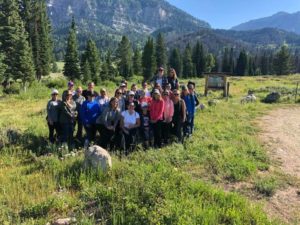 .
. 
It is a time of self-care, deep reflection, and for me- a chance to meet many of them in person. Those that have been on one of Chris Kyle’s Revitalization Retreats as a couple have spent up to 5 hours with me in online coaching sessions tailored to their needs as a couple. So to see them in person, I am overwhelmed with gratitude, honor, and humility to serve them again.
 .
. 
The Tetons command respect and silence, so it is a perfect place for quiet, reflection, and for these women- a chance to hear their spirit speak again. Long has the world and chaotic schedule of the service lifestyle drown out their internal voices.
 .
. 

If that wasn’t enough, we take them out of their comfort zone (in front of each other). Many pick up shotguns and archery for the first time. Conquering the fear of kickbacks, loud noises, and even rewriting narratives of negativity associated with weapons. Without their sweet husbands over their shoulder, they find the inner strength to try. That, of course is rewarded by the cheers of those around them who know what they are overcoming. The staff at Safari Club International are not only the most amazing instructors, but have a teaching heart- filled with patience for all who come there. They serve with grace, love, and even the chef and his wife love each person who comes through the door.
 .
. 

.
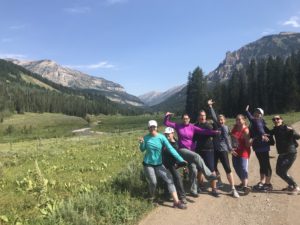

Of course I try to get in a few opportunities myself to stretch out of my comfort zone:
 .
. 


.
 .
.It wouldn’t be complete if I didn’t push them to a new level emotionally. I guess that is my reputation now, which I had to laugh at. Many of them were afraid of me in sessions, knowing that I would see behind the curtain. Of course, it is in deep love and respect. But I know that what I love is to see people I work with reach inside and discover new truths, break down lies that have long held them back, and find encouragement again. Challenge, sometimes, is what breathes life into us and our family. It may not be comfortable, but it is usually rewarding. Many of these spouses let me dig deep along side of them. Many of them did it on their own, truly embracing the opportunity that was put before them. Every single one of them went home better.
My favorite part of all of it is to see them walk back just a little taller than when they came.
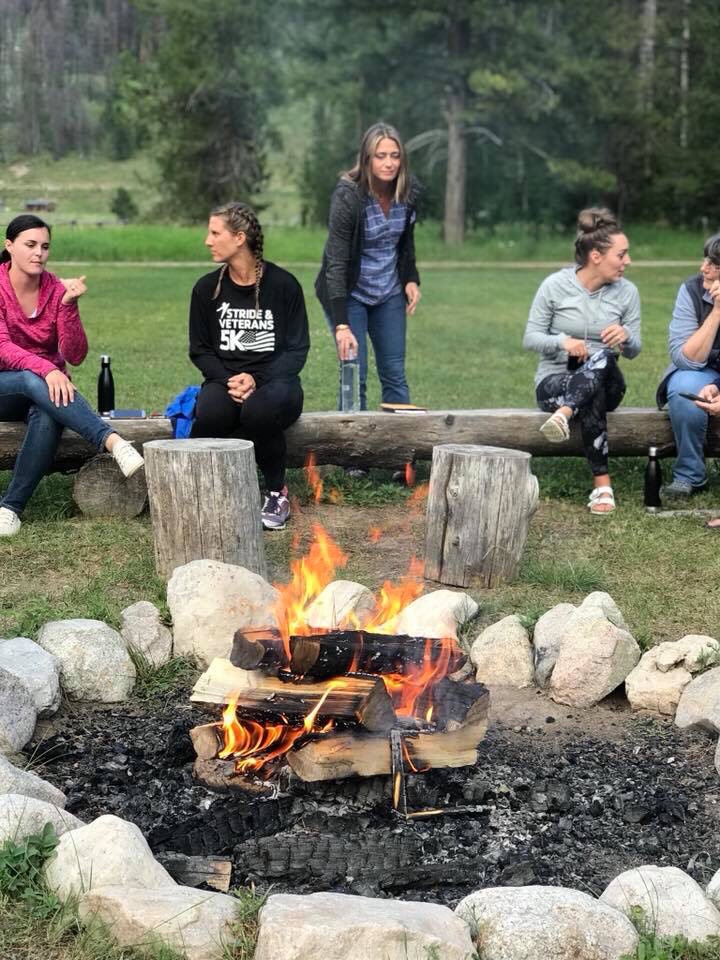
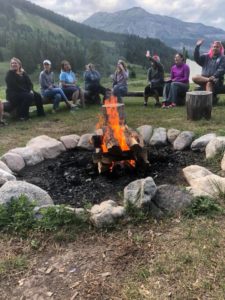 .
.  .
.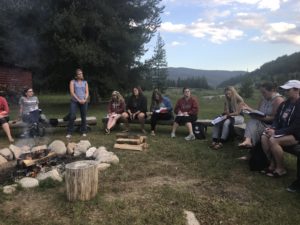
I could not be more honored to serve along side the amazing staff of CKFF. We all have different talents and together, it is a force to be reckoned with. Every detail is considered, every gift bag made with love, and the trust they have in me as a facilitator leaves me free to do what I love and I do not take that for granted.
Special thank you to Taya Kyle for sharing her vision and making it possible to serve these families. We could each not do it by ourselves. Today… I am thankful for a team I have long prayed for.
In the words of one of the spouses:
Last weekend I had the honor to befriend 29 beautiful, BADASS women… we laughed, we cried, and we laughed until we cried. We were vulnerable, completely out of our comfort zone, yet we shared some of the rawest and trying times we have ever experienced – not only in our marriages, but in any and every aspect of our lives. Corie dug deep and sometimes without trying. We learned that we have things we can internally work on within ourselves to better our relationships and who can and cannot be invited to a backyard barbeque; we also learned about self-love and that it is perfectly okay to take care of ourselves, as we, military and/or first responder spouses, have an enormous influence on our households, whether our husbands are home or not. Though, we found to have many things in common by the end of the weekend, one thing that stuck out for sure is that love conquers all (1 Corinthians 13) – we love our spouses unconditionally and given our circumstances, being a service member’s spouse isn’t for the faint; it requires strength and sacrifice, yet these women do life so gracefully. We all have a story. We all matter. You matter. Just remember to remind yourself periodically to practice grace, show gratitude, and always, always choose to forgive.
-
The Moral Injury Series
The topic of moral injury continues to be discussed within the military and veteran space, but many still are unclear what it is and how it impacts a person and their family. Moral injury is often described as the internal struggle a person goes through after being asked to do something that goes against his or her morals or values. For many of our service members, this is a real issues that deeply impacts their ability to recover. In this FANTASTIC interview, listen as I speak with Chaplain Timothy Mallard, a subject matter expert not only in moral injury, but soul injury. Soul injury, he describes, is an even deeper and sometimes more complicated injury to the soul- often not due to anything the person did- but more so done to them. Sit back with a cup of coffee and listen. You wont want to miss a word of this two-part conversation.
Part 1:What is Moral Injury?
Part 2: The Role of the Family
Part 3: The Role of Community & God
-
Calling for Chaplain Spouse Contributors!
 Are you a chaplain spouse? Do you love to write or is it something you’ve been interested in? Read on, my friend…
A few years ago, I came across a dissertation paper that was studying officers’ spouses. The study found that as the service member was promoted in rank (and the spouse became a more senior spouse), there was an increase in isolation which led to increased depression and anxiety.
That part may not surprise you. But then I came across one sentence that said that the increased isolation these spouses experienced was very similar to what was commonly seen in a pastor’s wife.
Because I, too, am a chaplain’s spouse, I realized that it is quite possible that our community struggles with a double whammy. This was what fueled my passion to do the Anonymous Chaplain Spouse Survey in 2015 and 2016. My research, along with many conversations with senior spouses, has confirmed what many of us know to be true. That being a chaplain spouse (although quite fulfilling) also brings difficulty that we must be willing to talk about. Whether it is real or perceived, chaplain spouses tend to struggle some of the following:
- Isolation from family, friends, and sometimes military spouses we are assigned around
- No consistent church home/community (especially active duty)
- An internal struggle to be involved out of calling vs obligation
- Difficulty with being authentic/vulnerable for fear of feeling weak or jeopardizing a spouse’s career
- Watching or experiencing your chaplain’s experience of burnout and stress
- and so much more.
The Chaplain Spouse Blog is an authentic and safe blog .
I am inviting chaplain spouses who are interested in writing to join me in creating authentic meaningful content for our community. If you are interested, here is what you can expect.
Content contributors can/will:
- Remain publicly anonymous if desired, but must be confirmed as a chaplain spouse
- Touch on authentic topics for our community
- Write content that breathes life into others rather than be divisive
- Have the option to write content that is faith-based
- Find community in an ad/political free platform
FAQs
The Lifegiver mission statement is purely to “provide a place for honest conversation and breathe life into our community.” Although that sounds pretty vague, it hopefully sets the tone for positive content while remaining authentic.
1. Is there a commitment?
Not at all. For those who wish to write regularly, I will definitely consider it and welcome having new and fresh content. I personally work better when I have deadlines each month, but you may be in a place where you want to write as you feel prompted by a topic. If you are working on a piece, I wouldn’t mind getting a heads up though!
2. Is there any payment involved?
At this time, no. In order to keep Lifegiver a free resource, as well as a nice platform where people want to come, I do not take sponsorships and therefore do not have incoming funds to pay out. I have hesitated reaching out for contributors or team work for a long time because I have not wanted to “ask” for more than what I know you already give to the community- especially as a volunteer. However, I also want to be obedient to the prompting I feel to give you a place to both give and receive positive, encouraging content.
3. How will you decide who will be a contributor?
I am not currently turning people away from this opportunity as of yet. I would definitely encourage you to turn in any brief writing samples you may have. If you are just beginning, that is ok, too! We all have to start somewhere. Just like a family, I expect to have various writing styles and experience. The great thing about a blog like this is that I can create categories like devotionals, educational, PTSD, support, etc.
However… Any articles, or behavior, that is divisive, destructive, or does not have healthy movement forward will not be included as it does not align with the mission statement.
4. Will you be including faiths other than Christian?
As of right now, yes but with some limits. This may change, but it would not be helpful to our community and in line with the calling of a chaplain family to not be inclusive. There will be limits to faiths that are attempting to proselytize through the blog. This is a place of support. I will also have the ability to create categories on this if necessary. Limits on this also go back to being filtered through the mission statement.
5. What topics can I write on?
What is most important to me (and I believe to the community), is that it is authentic, relatable, and has movement forward. In other words, I would love for content to deal with tough topics that are rarely talked about openly, even if they feel negative. I only ask that the article ends in encouragement and movement forward.
Consider writing on topics that other chaplain families are wrestling with and experiencing! Please try to steer away from personal blog style writing where you are documenting your own journey. Feel free to share parts of your story, but use your story make a point or make it more relatable to what someone else is experiencing. For more on this, consider watching my video on “Telling Your Story“
6. What is the process of being accepted and submitting an article?
- Apply and turn in a brief writing sample if you have one (see below)
- After you receive an email acceptance from me, consider asking for feedback from me or other chaplain spouses on your topic.
- Send me an email on a topic you would like to write on and start writing! Aim for 800-1000 words.
- Enjoy a FB group just for chaplain spouse writers
- Send in your article and wait for editing.
- Receive your article with edits; approve or appeal any changes until an agreement is made.
- Article is submitted and waits in the Lifegiver queue for publishing. You will be notified of the dates of your publishing
A note on editing:
Please know that all articles will be screened and possibly go through some editing before they are made public. I know first hand that it is quite vulnerable to have someone edit your work. If this is new for you, I understand completely! I promise you will value it as it may even sharpen your skills as a writer! Your article will not be published without your final approval 🙂
7. Do I have to make images for my article?
Not if you don’t want to. If you feel especially talented in this area, I am open to it. More on this to come…
If you are interested in this exciting opportunity to serve, fill out the form below!
I’m so excited to do this with you! Corie Weathers, LPC
-
Raising Gen Z Military Kids
There is a moment in parenting where you realize that you no longer have the advantage and you now know absolutely nothing. For me, it was the moment I was schooled by my kids on the new word for “cool”, which is now “savage”. Savage? Really? What followed was daily lessons of new social rules and slang.
Trying to figure out the new world of pre-teen/teen is like my first few years as a new mom. You second guess everything and it seems like they are going to hit their head on every corner, or in this case be emotionally rejected on a daily basis. How do our military kids do this?
Generation Z, born from the mid-90s to around 2012, is already swinging the pendulum like every generation before them. According to my interview with Gary Allan Taylor from Axis, this group would “rather lose their sense of smell than their digital device.”*
Now before you freak out (I did), we adults aren’t doing so great in that department either. Unlike the Millenials before them, Gary Allan said Gen Z kids value the importance of family even more than career. This could be because they have watched their parents live out a heavy work ethic to secure the house, career, and status (maybe even our social media status). Considering it is their parents “work ethic centric” generation that is running the academic generation, is it any wonder that anxiety and depression is on the rise for these students? High school graduation requirements look more like college and grades/SAT scores are no longer enough. “Family” sounds like a good direction for the pendulum.
Even bullying has changed. Both civilian and military parents have told me their Gen Zs have started to disconnect by putting in their earbuds to avoid interaction with aggressive kids, much like adults do on the subway. I think I would put my earbuds in, too.
When it comes to military kid Gen Zs most adults I’ve spoken with agree that much of their character has been shaped by overcoming difficulty and rejection, resulting in more mature and confident kids. Many are often more comfortable around adults than kids their age.
But that doesn’t mean they don’t need connection with their peers. All kids gravitate towards peers developmentally, which makes our military teens even more desperate for it. Yet, as I’ve experienced and heard from other military parents, that’s especially challenging in a civilian school where peer groups formed over years of neighborhood cookouts and team sports. It is difficult to advance in athletic skill with frequent moves or their sport of choice isn’t easily accessible.
Gen Z’s have massive amounts of information at their fingertips. Gary Alan said in our interview that they rely more on internet research and their peer group than authority for figuring out their way ahead. However, our military kids are struggling to find that peer group and say they feel either completely ignored or bullied for their attempt to insert themselves.
The concern here is that some military Gen Z kids would almost rather not form peer relationships at all than address rejection, bullying, or the effort to assimilate when they will eventually leave anyways.
If you are like me and need encouragement (in most cases every week), here is what I have heard from reaching out to parents and experts in my current “Raising Gen Z’s” series on the LIfegiver Podcast.
- Family: The fact that Gen Z kids are valuing family more than ever makes it easier to plan intentional family time to talk about being a Gen Z Military kid. As much as they are connected to their devices, they will likely not complain after you have agreed to set all devices down for a game night. (Expect full tantrums beforehand, though).
- It really will be ok: The other day, I spoke with a military brat who is entering her senior year of college. She was brilliant. Brilliant in her social skills and maturity. She told me how prepared she was for the academic load of school, but more so for the rhythm she developed over the years to assimilate while civilian students around her fell apart. Even better, she described detaching from an unhealthy peer group because she realized her maturity made her a better leader than a follower- WOW!
- Speaking of leadership– One civilian parenting expert I interviewed, pointed out that our kids’ intensity while assimilating into the school system has a lot more to do with their leadership potential. This really encouraged me to redirect my kids’ emotional energy towards leading rather than following as a means of fitting in. This next school year, we hope to have the boys be military kid ambassadors for incoming students.
- Wise Connections– Perhaps the answer for our kids isn’t assimilating the way we would “back in the day”. In a culture where bullying or meanness is ramping up, why not encourage our kids towards smaller circles? A few close friends is not only realistic, but models what adults do.
I’ve looked forward to this season with my kids for a long time. I enjoy the dialogue, the jokes around the table, and watching them evolve into awesome bigger people. Parenting the next generation has been a lot harder than I thought, especially with the challenges of the military lifestyle. I know every parent in the history of the world has said that, but I now see the importance of educating myself. Even if that means my kids will be the ones to school me- memes and all.
-
It’s Time for You to Be a Military Spouse Mentor. Here’s Why.
The truth is that many of us have been in receive mode for far too long.For the past five years I’ve watched the military tradition of mentoring fade or be attacked as unnecessary.
Our most senior spouses have told me over many cups of coffee why they believe that is. And it starts with where the tradition of mentoring came from.
World War II, Korea and Vietnam-era spouses lacked the programming we have today. To figure out how to navigate this lifestyle, they pioneered the coffee groups and clubs we so often think of as “old school.” They created a system out of nothing and a community now known for its tight knit support.
And for many years we gleaned from their mentoring, wisdom and servant hearts.They passed down etiquette, the art of asking for help and even tradition that our culture had otherwise long forgotten. I can look back now and see how fat and happy I got from the endless pouring out they did into my life and the lives of others around me.
But then things changed. The world changed, and war changed us. Social interaction became digital and deployment tempos exhausted everyone.
We relied on funding to keep the programs going. We didn’t need those volunteer dependent coffee and spouse groups anymore. But when the money disappeared, we found ourselves where we are today: multiple generations weary, sitting in our homes like self-licking ice cream cones needing more than we can offer.
But now that change is coming again, and it needs you. Think you’re not qualified? Here’s how to know you actually are.
You have been in this lifestyle for at least one assignment. This could be two years or five, but chances are you know the importance of an ID card, how to get on the installation, or what a commissary is.
You have been through a deployment. There are many spouses who are hearing about deployment orders for the very first time. Do you remember how you felt when that happened? A kind word, a few strategies, and you have powerful influence.
You have experienced a PCS and lived to tell about it. There are endless blog posts out there about how to navigate getting your household goods across the country, but a few tips over a cup of coffee will settle anyone’s nerves.
You have experienced the warmth of someone opening their home for a meeting. Remember when people actually invited you into their homes? Having social events at restaurants are convenient and have their place, but nothing is more vulnerable and inviting than being in someone’s home, not to mention easier to have conversation in. Make it a potluck or cater to keep it easy, but put down Pinterest and invite people back in.
You remember when readiness groups were a positive thing. Believe it or not, there are still installations and tight knit units that have hugely successful readiness groups. They still see it as crucial to their wellbeing. One of my favorite mentors told me when I came in as a new military spouse, “If you don’t like it, be part of making it better.”
Complain all you want about lack of funding or generations before you or after you, but the truth is that we all need each other. We always did — we just got distracted. Like the generation before us, it is time to build up what we find lacking. Without blame or indignation, we need to raise each other up, each lifting the weary one next to us until that one can reach out as well.
Experiencing the loneliness caused by a lack of camaraderie, direction and purpose will make anyone long for people again. It’s like a deployment. When your spouse has been gone for a long time you can actually experience what is called “skin hunger,” that physical hunger for a safe hug or touch. My biggest hope is that our community has been without it for long enough and we will not see it disintegrate further.
You might be wondering how you can be expected to give back and support others when you’re just so exhausted.
Although you may feel like you have nothing to offer, but mentoring does not have to involve a commitment of hours each week. The most influential moments I have had required little effort or commitment from a mentor. One spouse brought me a specialty cup of coffee during a deployment when it was nap time for my toddler. Another held me accountable to not overcommit during a deployment. Another let me co-host a coffee so I could learn how.
A change is coming and I hope you will join me in making a difference where someone once did for you.
-
Fort Lewis Strengths Training April 2018
My trip to Fort Lewis was a full one! Three events in one trip. I had the honor to again speak with the spouses of special ops soldiers. They have a special place in my heart as they go through a rapid tempo of deployments and trainings.
The first event was with a small group who went through Sacred Spaces as a Bible Study. I joined them on the group FB page at various points to connect and encourage them.

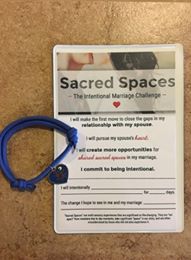
They gave me the best gift ever- one of their group shirts that just happened to have the WW logo on it 🙂
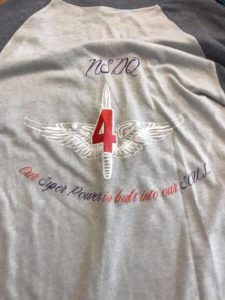
Next up: and evening of empowering some of the strongest, most elite spouses I have ever met. We talked about resiliency, but more importantly GRIT

The following weekend was an opportunity to do another Strengths event for the Fort Lewis PWOC ladies. We went to a gorgeous camp site where we stayed in cabins that looked like train cars. It was a fantastic event that ended in a powerful prayer the ladies did over me and my friend Sarah. I so love these ladies and their prayers (and yours) have more of an impact than you could know.
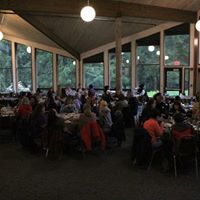





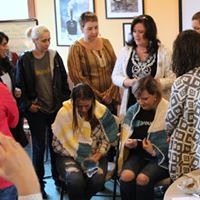
-
Fort Drum Strengths Training
It was another great event at Fort Drum, NY! The women’s PWOC invited the military spouses of Fort Drum to discover their strengths and find a new sense of purpose. Each time I do this, I am more convinced that our military spouses are in need of encouragement now more than ever. With an increase in military tempo around the world and the continued struggle to find employment, spouses are exhausted. What I absolutely LOVE about living out your strengths is that it opens your eyes to who God designed you to be. There may be talents that you don’t even know you have! There may be talents that other people in your life have said were weaknesses- but only because they don’t see the world the way you do.
At Fort Drum, spouses were emotional as they discovered the truth about themselves. That there was far more to love about themselves than they thought. Lies from the enemy were shown for what they were and the truth of God prevailed. Lives were changed. Women were set free. Women walked away affirmed in their current purpose and others discovered plans for a new direction in their life.
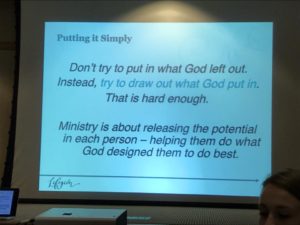
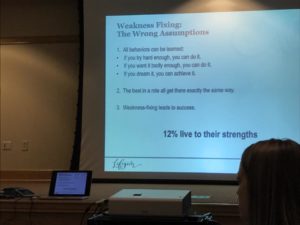
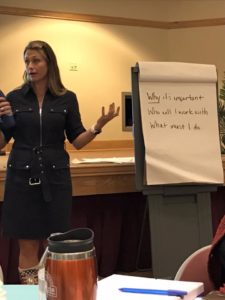
-
Military Spouse of the Year TownHall- Hero’s Journey
May 2017
I went back to Washington, DC for the annual Armed Forces Insurance Military Spouse of the Year Awards. The day before, though, is a time for 250 of the most influential military spouses descend on Washington DC to not only network, but be empowered. I was invited to speak at the TownHall and spoke on the Hero’s Journey, sharing the journey that ever super hero must go through in order to find their purpose. By learning to embrace your back story, listen for your calling, and take the risk of adventure, every superhero must then be willing to enter the battle of their lives- themselves. I provided and exciting and inspirational talk that was captured on Facebook Live and was later reproduced as an episode for my podcast.



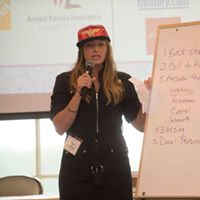


-
Misawa, Japan Women’s Leadership Conference May 2017
May 2017
Corie had an amazing opportunity to go to Misawa Air Force Base, Japan to lead 120 women through the Gallup StrengthsFinders. This full day workshop event not only invested in each person’s individual talents, but also in learning how to work better with others. It was an amazing opportunity to invest in an OCONUS installation that often struggles with isolation and depression while being so disconnected from the states. Lasting relationships were built during a fun and meaningful time together. Special thank you to the incredible Women’s Ministry Board for all of their hard work pulling off an incredible event! Day two was all about investing in key leaders to train them up as Coaches in the Gallup StrengthsFinder- a perfect opportunity for mentoring those who attended the outreach event the day before!



-
Spouses Retreat for Spouses- Charleston, SC
June 2017
Corie leads a group of spouses through a weekend retreat. Spouses enjoyed fun, games, a Girl’s Night Out and workshops on how to be your own super hero. Corie encouraged the spouses toward self-care, setting boundaries, and staying deeply involved in community.
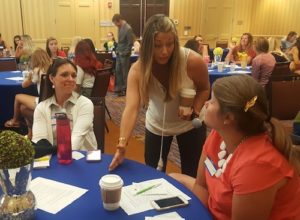
-
Book Signing, Savannah, GA February 2017
 Few authors get the opportunity to do book authors in a place like Barnes and Noble, so when I got the opportunity I was so excited. Savannah was the perfect place, too because Hunter Army Airfield was mentioned in Sacred Spaces as a key place that is dear to our hearts. Special thank you to Elva Resa Publishers for making this possible!
 -
Sacred Spaces Valentines Banquet, Fort Stewart, GA February 2017
 What a joy to bring Sacred Spaces to Fort Stewart, GA. Matt and I had the honor to speak at a Valentine’s Couple’s event where we celebrated marriage with chocolate, games, and a heart to heart talk on the difficulties and victories of marriage in the military. Everyone got a copy of Sacred Spaces! We talked about how difficult it can be to connect and find intimacy in your marriage when each of you are experiencing very “sacred” moments separately. Special thank you to the amazing leadership of Fort Stewart PWOC who made this event GORGEOUS!!!
As an added bonus, I got to give a HUGE hug to Regina Wages, who I met at FOB Fenty in Afghanistan. If you have read Sacred Spaces, you know how amazing it was to run into her again. She was the USO representative now back home in Georgia after spending almost a decade in Afghanistan serving our soldiers there. I am still shocked that the USO does that. I am amazed by people like her.
-
Lifegiver Stories
My favorite stories are ones of redemption and restoration.
Every one of us experiences some level of pain… some level of suffering. As a clinician, it is always an honor to step into someone else’s story and walk with them from darkness into light. Healing, though I have found, is only when we evolve to a place where we can bring purpose from pain by serving someone else. That… is when we see that God can indeed bring good out of all things.
“Healing, though I have found, is only when we evolve to a place where we can bring purpose from pain by serving someone else.”
So… introducing Lifegiver Stories. A place where you can read and listen to real stories of other people who have seen light come out of darkness. You will not find perfection here. In fact you will hear some level of healing still to be found because perfect healing is something we will not see this side of heaven. But I guarantee, you will hear a little bit of your own story in their’s, practical steps that may help you turn a corner, and hope that light can shine out of the darkness.
Would you like to submit your own Lifegiver Story? Don’t worry, it’s not as scary as you think and I will walk you through some tips on how to get it ready.
*I reserve the right to not publish stories that are not in line with the values of Corie Weathers, LLC and the Lifegiver Podcast. All content published is owned by Corie Weathers, LLC to be shared and used to encourage others. -
How to Handle the Holiday Traditions Problem in Your Military Family
A few weeks ago, a seasoned military spouse well into retirement asked a question that threw me: “What traditions have you and your husband created for your family?”
It was a simple question to which I gave a simple answer. For Christmas each year, we drive around looking at Christmas lights in our pajamas with hot cocoa.
But in the days that followed, I wrestled with my limited answer.
In reality, the frustration of trying to recreate traditions wherever the Army sends us has caused us to give up on many of the ones my husband and I grew up with.
Frequent moves, deployments and military separations have created a mixed bag of experiences over the years that rarely live up to “tradition.”
During some assignments, for example, being too far away made it impossible to be with family during any holiday — so we were on our own, blending our traditions with those of other military families.
We’re in the middle of a permanent change of station this year, and I have been sad to realize that I have become apathetic. This is our third PCS in a row over the holidays. After a while, mustering the energy to pull off an amazing Christmas experience while exhausted is just more exhausting.
And it’s not just Christmas. Winning “Mom of the Year” is impossible when your child is the new kid at school and you feel the pressure to top last year’s Pinterest-inspired party.
One year over a deployed Easter, my young children fought dressing up, going to church and egg hunting. I had a near breakdown trying to make Easter feel like “Easter.” My attempts to make up for the lack of traditional elements seemed only to make everyone miserable and me a lot less fun to be around. And, of course, that paled in comparison to my husband’s experience of the holiday overseas.
So it’s no wonder I didn’t have a better answer to my friend’s simple question.
I realize now that some of my motivation to have and keep traditions has been more about overcompensating for the guilt that I can’t offer all the traditions my husband and I grew up with.
Rather than asking what activities would bring meaning and togetherness to our little family in the moment, I have been caught up in someone else’s definition.
So what can I do about that? And what can you do about your traditions — or lack thereof?
My “aha” moment was the realization that my husband and I needed to be more intentional at creating the traditions that make sense for our military family — a task that takes communication.
Over the years of trying to fit in traditions, Matt and I have not actually discussed what traditions are most important to each of us. We have not talked about what makes Christmas feel like Christmas, what activities make us feel most together or bring us the most meaning, or what activities we want to be more intentional about doing regularly and which ones are only adding more stress.
Tradition finds its roots in upbringing and culture. Matt and I learned this quickly during our first marital conflict 18 years ago over whether banana pudding should be served cold or hot. His parents, born and raised in the south, served it no other way than warm. Mine, raised in the midwest, served it cold. Of course, we both brought those beliefs into the marriage with us.
As silly as that sounds, all of us bring beliefs and ideas of what defines “family,” as well as the activities that symbolize togetherness and meaning.
Trying to form one definition in marriage when there are deep emotions attached is challenging for any couple. The military lifestyle can make it even more difficult to let go of or make changes to traditions that shake your beliefs and values — like my attempt to force Easter tradition during a very challenging time for our young family.
Freedom for me, and relief for Matt, is learning that tradition motivated by “I have to” is more of a prison than a celebration for all of us. It is an over-ritualization that takes away more than it gives.
Smaller traditions I have not thought of in years are beginning to stand out as more valuable, emotional and sentimental than ever — such as large Sunday meals together (known as “supper” in the south). These are the reminders that not all traditions we grow up with should be forgotten.
Instead, they can be enjoyed even more when we get to be a part of them. And some are quite doable and realistic, which makes them even more endearing when military life can throw you curveballs.
I had also not appreciated some of the powerful traditions we have already created that have brought us memories of connection and laughter.
Every PCS, we celebrate our first night in a new home with Chinese takeout. We’ve replaced birthday parties with a family day where we celebrate that individual for an entire day. And, lately, brave days at a new school are celebrated with frozen yogurt and conversations about courage.
Perhaps part of growing up is the reminder that we must choose to embrace difficulty with creativity rather than resentment.
There are some traditions that I will continue to grieve as they may not be possible for our military family. Yet, in their place is the opportunity to decide for ourselves who we are and what is most important to us. This can be exciting and full of new adventures if I allow it.
And even more rewarding? The knowledge that someday I will pass down to my own children the truth that traditions are more about the people they bring together than anything else.
-
Timepiece
I put on my old watch today. My normal routine is to wake up, drink a cup of coffee, or three, and then when I can’t put it off any longer, take my digital watch off its charger and start the day. That moment says a lot of things. It tracks my steps, my heart rate on the treadmill, and makes sure I never miss anything. I don’t miss texts from my husband, can access email if necessary. I can completely stay connected all the time, everywhere.Except as I decided to put on my old TAG watch this morning, I realized I’ve missed everything.The time was right, which was a personal achievement that I had at least worn it since the last time change. But the date was wrong because it is part of an archaic system of winding the hands of the clock to set it correctly. These watches take effort to stay connected. It said it was the 12th of something and definitely not from this month. Here it was the 22nd which meant I had not lost ten days but more like months and ten days. As I wound the hands of this time piece, I thought of everything that had likely happened during those endless hours. Winding a clock like that you really get a sense of how much time really does fly by. My digital watch never makes me do that.While I had been busy staring at emails and deadlines, somewhere in there were football games for my boys, and deep meaningful conversations with a person across the table from me, a new niece born into this world. My digital timepiece offered false connection and anxiety and sold it as convenience. How many conversations had I been distracted by the “tap tap” of my watch, saying something or someone was more important than who I was in front of?No doubt the engineers of my digital watch worked for years to make a lightweight version that I would hopefully not even notice, except for every second CNN buzzes my wrist to let me know that people are drinking more water than ever considering infused water with mint on the trend.No, this watch is heavier. Made from metal with a mother of pearl face. Engraved with a love note from my husband on our first Christmas together. It is weighty. Like the time I have left with my boys, enjoying an active lifestyle, and moments to get it right in my marriage.So much more is weighing me down than ever before. But the right kind of weight. The heaviness on your heart that feels right, sober, even lucid. Seeing the world for what it is- a big mess of sin, neediness, and problems that will likely only go away once we step into the glorious light of heaven where it all vanishes in the radiance of a God that never fails. And that my part in all of it isn’t to save it, but to enjoy the process of discovering God’s goodness right in front of me. My children discovering courage on the field, my marriage practicing grace again and again, maybe even a walk in the woods without thinking about my heart rate for once.As I wind my watch to sync it with today, I’m so grateful for the shared history it represents. I’m so grateful for more “time” to be better, to get it “right” whatever that means. To embrace my today and be a little bit more present with what matters. I think today I’ll go against what the world says and put on the watch that represents my story. An intentional decision to be who I know I am instead of who the wold says I “could” be, “should” be. No, today, I think I’ll take the time to connect differently. -
What I Learned From Winning Military Spouse of the Year
What happens when you take a woman who serves in the shadows, who is terrified of success and who is flawed like everyone else, and thrust her into the spotlight?
I have tried many times to communicate what I have learned in the almost three years since I was named 2015 Armed Forces Insurance Military Spouse of the Year, but words cannot contain it.
I have learned about my own strength, the crippling power of my own weakness, and both the ugliness and beauty that exists in community.
That intense character growth in such a short time often felt as if I were in a never-ending free fall, while still trying to accomplish everyday tasks.
I am forever grateful for the award and the doors it opened, but even more for the doors it exposed in my heart that I had not noticed.
Here is some of what I see now that I couldn’t see before.
There is great wisdom in listening and learning from those with different viewpoints.
We are often limited by our own points of view.
For years, I served “boots on the ground” as a volunteer at events and programming. When you are new to the military, you tend to see all the ways the institution could be doing things differently or better. We rally to make things more modern or culturally relevant. We advocate from the ground up, frustrated by leadership who may not share the same passion.
This approach is not necessarily wrong. In fact, the next generation can be crucial to any institution’s success. Good leadership must listen to those it leads, but there is great wisdom from those who have gone before us.
My experience of sitting at the table with wives of generals and mentors who have lived this life for close to 30 years has been eye-opening.
If we would only listen, there are incredible stories of courage and fierce advocacy that led to the benefits we now freely critique.
I have been in awe of the character that has been shaped by years of hard work, sacrifice and maturity of our most senior spouses. Each generation carries unique challenges and victories that are meant to be celebrated together.
We all must listen more.
The military lifestyle can bring out the best or worst in you.
As I have listened to your stories, I have heard of both victories and devastation.
I have seen military spouses do incredible things in their local communities and installations, start their own businesses, advocate on Capitol Hill and run organizations that serve thousands of people in need.
The military spouse community is a fierce force to be reckoned with when they are at their best.
But this lifestyle also has a way of sneaking resentment and pride into our hearts before we can even say “America.” In my own life, I vulnerably share in my book “Sacred Spaces” how it impacted my marriage.
The response from the military spouse community has only confirmed what an epidemic this really is. When you spend most of your life feeling out of control, you will control everything you can get your hands on. This inner tension can eventually breed resentment and bitterness if you don’t keep a close watch on it.
While there are thousands of military spouses doing great things with a healthy internal drive, there are others who are fueled by the need to have control.
The only way to truly succeed at whatever we have a desire to do is to keep a light on those dark corners, maintain our priorities and be open to truth from those around you.
I would have lost everything had I not held onto my faith, listened to my husband and given key friends access to my inner world.
Outside forces will tempt you away from what will bring you joy.
There are few things on this planet that can bring you real joy.
We think it is found in success, our kids’ success, promotion, financial freedom or popularity.
But I can assure you it is not. It is not found in being relevant, the number of likes in social media, paid gigs or even service to others.
I have learned in the last few years that there is an enemy that will distract you if he cannot destroy you — and I promise you his goal is to destroy you.
Most of us think of moral failings or destructive decisions when we think “temptation,” but the stronger, more disabling temptations are in seemingly “good” opportunities.
Our community, as well as the first responder community, is founded on protecting life and promoting peace. We serve our communities and country by sacrificing what is comfortable and convenient.
As military spouses, we often feel we are an extension of our service member by giving similarly in our own way.
It is hard to say “no” to a good thing, whether it is a new nonprofit idea or an unfilled volunteer position.
Across the globe, I have seen many marriages fall apart because of overservice.
Work and accomplishments are good for our spirit. There is nothing wrong with finding purpose outside of the home using our unique talents and gifts.
It is when we find our significance there that it is dangerous. There will never be an end to the need in the world, so we must develop self-control of our calling before our calling controls us.
Otherwise, we will have nothing to offer.
Seasons may change how we serve each other in marriage, but peace is found in the roles God created for us.
I know someone will argue me into the ground on this, but I have lived it and survived to tell you the truth.
And today I have nothing but gratitude and respect for my husband taking on the home for the last two years while I traveled.
In many ways, he did a better job at home than I have ever done folding laundry, cooking dinner and picking up sick kids from school.
I have heard many military spouses utter the resentful words that used to be in my heart, “It’s his turn to revolve around me.”
I now grieve that I ever entertained that level of selfishness.
The last two years of role reversal have been equally rewarding and difficult, to say the least.
Out of love, he wanted me to see my own potential — and I did.
I hear many service members wanting the same for their spouses, but the grass is not always greener on the other side. Once you get there, you will always want to go back home.
I constantly fought off an underlying feeling of unbalance and stress. My heart wanted to be home. My attention felt torn, and he felt the same way. It was difficult to concentrate on his own job that provided for our family.
I kept thinking about Nicole Spaid, the 2015 Marine Corps Spouse of the Year whom the other spouses and I call our “Mother Hen.” She turned down several opportunities during her year with that title so that she could be fully present for her family. Her resolve has more influence in my life than she could ever know.
Now that my husband and I are finding better balance and taking back the roles that we believe God created in us, we are finding peace in what we believe He originally designed.
I recently saw a quote by Mother Teresa that could not be a better summary of my last few years: “If you want to bring happiness to the world, go home and love your family,” she said.
As much as I find purpose in serving others, this season has taught me that there is no greater joy than being at rest with my God and at home with my family.
Entering into this next season, my eyes are open to loving my family with my best first, and then offer the world what I have second.
-
Remember These 5 Things Next Time You Fight With Your Spouse (as seen on Military.com)
It might sound crazy, but conflict in your marriage can be a healthy sign.
Two people who see the world in very different ways are never going to agree on everything.
Too often, couples let marriage fighting spin wildly out of control before they realize it could have been handled differently.
But there’s a difference between disagreements and a full-blown argument. How do you toe the line?
We’re usually not our best selves in the middle of an argument, so it can be difficult to keep that conflict from escalating into a destructive, hurtful conversation.
How do you save yourself from going there? Here are five things to remember the next time you get into it.
1. Think: “My spouse is for me, not against me.”
Shaunti Feldhahn is a social researcher who has dedicated most of her career to understanding marriage. She’s interviewed thousands of couples who said they were happy to determine just what made their marriages so great.
One of her biggest finds is that 99 percent of individuals she studies genuinely love and have their spouse’s best interest at heart.
What does that mean for you? It’s likely that your spouse is not intentionally trying to hurt you at any given time, including during a heated argument.
Remind yourself that your spouse loves you and wants the best for you. It means that they had good intentions and still do.
When my husband and I get into a tiff, we remember Feldhahn’s research, and one of us will say, “I am for you, not against you.” It is a gentle reminder that the problem is the problem, not each other.
2. Think: “I can only control me.”
When on the defensive, there is something primal in us that wants to control the other person to calm them down or stir them up. We say things to invoke a response or withdrawal to drive home the point of our hurt.
The military lifestyle doesn’t help. Both the serving spouse and supporting spouse can feel out of control, which makes military homes ripe for both spouses to want complete control.
The reality is that we have no control over each. Instead, what we have is influence. Our behaviors and decisions cause consequences, and that definitely influences our spouses. But ultimately you control your reactions, and he controls his.
Reminding yourself of that during marriage fighting can help you remember that you can choose not only how angry you get, but how you will respond in this moment.
Hopefully, you can choose to react in a way that brings you closer and influences him to do the same.
3. Ask, “Are we just HALT?”
When things start to get heated, ask yourself if the emotional reaction you’re experiencing matches the situation.
If not, there might be something else going on other than how your spouse said, “Good morning.”HALT stands for hungry, angry, lonely and tired. Good decisions are never made when we are feeling any of those things.
Sleep is always a challenge in the high operations tempo of military life. That’s why my husband and I decided a long time ago that arguments are not worth trying to resolve after 10 p.m.
Loneliness can also be a big factor for military families. When was the last time you had an honest, fulfilling conversation with a friend or got outside the house?
Loneliness can impact service members as well. If you’ve recently moved, your service member might be missing the attachment he or she had with the troops in their last unit.
If you think your spouse might be struggling with more than what’s on the surface, be sure to validate their current feelings while gently asking what else might be going on.
4. Know it might not be PTSD.
The prevalence of combat stress makes it easy for us to let it constantly take the blame for the stress in our relationships.
If your serving spouse has been diagnosed with post-traumatic stress disorder or combat-related stress, symptoms of irritability and mood swings are part of your relationship.
For those dealing with severe symptoms, it can be very difficult to decipher when irritability is due to a real issue or if the symptoms are exacerbating the situation.
After providing counseling to many couples with a variety of challenges, I have found that there are always two sides to a couple’s story. In other words, most times there are legitimate feelings that are upsetting your spouse, and the PTSD is not to blame.
By labeling every conflict as PTSD or mood irritability, you might be minimizing what your spouse is trying to communicate to you.
Just as women don’t like the “it must be your hormones” comment, we must be careful not to label every irritable response as being connected to a service-related issue.
Tell yourself that this should be treated as a real and genuine concern before you label it “extreme” or a symptom.
5. Ask, “What would the 80-year-old version of me say?”
This is by far my favorite strategy for helping me gain perspective during a misunderstanding.
Lately, I have been picturing my husband and myself at 80 years old, sitting on a bench holding hands. In my mind, we are far past the petty issues, life has been full and we are full of gratitude.
When I find myself in the midst of marriage fighting and I am particularly worked up, I think about what the 80-year-old version of me would say.
Would she tell me that this battle is worth it? She has been through enough military separations to know that the smallest things that we argue about are ultimately time wasters.
I often picture the future us giggling at current us getting so worked up in the first place.
Then, when I picture 80-year-old me offering current me advice, she usually just tells me to stop making such a big fuss and kiss him already.
Eighty-year-old me is salty, wise and always has extra cookies on hand for the neighborhood kids.
Chances are, you have an 80-year-old version of you waiting to be invited into the conversation.
-
Try Some Extra Kindness in Your Marriage (As seen on Military.com)
During a particularly difficult week, I scrolled through Facebook and paused on a post reporting that a local Starbucks gave out customers’ orders for free with no explanation. Baristas answered inquiries with merely “Have a wonderful day.” Even though I wasn’t a customer, I found myself imagining my reaction to the barista.
“Why?”
Maybe I wouldn’t say it out loud, but perhaps the look of surprise on my face would give it away. My imagined reaction didn’t come from a place of paranoia, although for some it could. The question came from a realization that this business was choosing to lose money in their act of kindness. Why would they choose to do that? Gaining a few loyal customers didn’t seem like a worthwhile strategy considering what it would inevitably cost them.
They gave no answer. They simply said “have a wonderful day.”
What struck me about this interchange is that this act of kindness rested on a single value- worthiness. Starbucks determined the people it served as worth more than the cost. Each was worthy of kindness, not because they earned it or deserved it, but simply because they exist.
It is amazing how easy it is for kindness to slip from our minds in daily interactions with each other. The closer the relationship, the more we take for granted that the person will love us unconditionally. We expect them to be understanding when we’ve had a bad day or when we have disappointed them.
And yet, we are the first to point out their unkind tone when the roles are reversed. Perhaps Starbucks has it easy. Being kind to a stranger cost them only a latte and banana nut muffin at wholesale. But being kind in the relationships around us costs far more, so much so that we are shocked when a business schools us on how to treat one another.
Is it just me? Or perhaps you could stand to experience a little more kindness, too?
Kindness can feel like it should be linked to worthiness. It is only costly when we have to sacrifice something within us that wants to make it conditional. Choosing to be kind to my spouse when he or she comes home with a bad attitude is a gift, not an exchange of currency.
But what if your heart has been hurt by others’ lack of kindness? What if you simply feel you have nothing to offer?
That is what I love most about the Starbucks story. They didn’t have an answer except for “have a wonderful day.” They didn’t say whether they “felt” like being kind or what “moved” them towards kindness. They just handed out warm beverages with a smile.
Sometimes we choose a behavior and our feelings follow.
Every marriage or relationship has patterns. If we look closely, we will find how we trigger each other into what some experts call a “crazy cycle,” or the pattern of usual escalating conflict. The only way to interrupt the crazy cycle in your relationship is to do something different by starting a new pattern. Unfortunately, if you wait until you “feel like it” in the middle of an intense argument, it will never happen.
You must behave differently and your feelings will follow. This usually begins with a willingness to be kind.
Also difficult is having the courage to be kind to ourselves. Far too often I see individuals that give others the benefit of the doubt while internally whipping themselves into submission with shame. Being kind to yourself is also a virtue dependent on worthiness. You do not deserve kindness or forgiveness, you are worthy of it because you are alive. In fact, those you love are impacted by whether you are willing to extend kindness to yourself — especially children.
In the words of Brene Brown, “‘You are imperfect, you are wired for struggle, but you are worthy of love and belonging.”
But the best part about kindness is how contagious it is. Here I was, struck by the impact of this simple act of kindness in a coffee shop three states away. I didn’t even benefit from a free warm beverage, but I don’t really think that was Starbuck’s point. The message I received, from a Facebook post no less, was that one act can change things.
A shift in your own sense of worth impacts your home. Kindness towards your spouse can change your marriage. Kindness towards those around you can spread infinitely beyond what you can imagine.
Still having trouble with this idea? Here are a couple of ways you can bring kindness into your relationship today.
— Tell your spouse you love them without prompting
— Make your spouse their favorite meal
— Choose to end an argument rather than defending your point or being right.
— Forgive your spouse for something you have been holding over them for far too long
— Surprise them with a latte and a banana nut muffin.
-
Stellar Spouse: As seen on Military.com
I already knew I had a stellar soldier for a husband- but right then I kinda hated it. Perhaps you have one too. The kind of spouse that strives to be his best at everything and sets his sights on maxing out that PT test every time.
Before kids and the military, my husband and I used to go for long runs and chat about our life. It was quality time that usually ended with ice cream and a favorite show (oh how we miss our twenties). Once the military entered the story, early morning PT became his primary time to workout and I fit in exercise around everyone else’s schedule.
On this particular day we decided to go for a long overdue run together. As I laced up my shoes, I was about to remark on how nice it was going to be to run together when he put in his earphones and said, “but I won’t be talking, I’m working on increasing my pace”.
“That’s okay,” I said- more to prepare myself for the pain that was likely to follow, “I’ll do the same.”
We started off together, listening to our independent playlists. When we faced hills, he attacked them with purpose as I managed to keep up. When I was forced to stop and fix my hair, he jogged in place and focused on his watch. Finally, as we approached the last mile, my stellar soldier surged ahead- or maybe I started to lag behind. My legs begged for me to quit despite what my heart wanted. I started to accept my fate as officially “smoked”- when I had a thought.
Without realizing it, we were both shaped in two entirely different ways by the military lifestyle.
The military has a way of creating fantastic leaders that translate into fantastic role models at home. Mine appreciates organization, routine, and logical ways of finding solutions to everyday problems. He teaches our kids the values he loves about the military including work ethic, respect for authority, loyalty, integrity, and others.
The military had done something entirely different for me.
As difficult as it has been to constantly maneuver around his schedule, I have learned to embrace the role that creativity plays in chaos. I have to fit in my own self care- not because someone tells me to, but because it keeps me from losing my mind. Relationships in the home are more likely to come before order, and definitely more important than perfection. Leadership as a military spouse has become more about adaptability and a strong “whatever” mindset.
I watched from a distance as he finished his run and then checked his watch. Shame washed over me as I thought about how frustrating it is to be married to someone who folds laundry better than me, often thinks to start the crock pot before I do, and was in better physical shape than I was. To sum it up in view of the finish line, the military had made a stellar leader out of him and leisurely pace keeper out of me.
Unless you are in a marriage where you or your spouse quit along time ago, almost no one likes to be left behind. In fact, if you’ve been married for any length of time, you have likely experienced surging ahead or lagging behind your spouse in one area or another. What you do when you find yourself there, though, reveals the state of your true character.
“Do I finish strong or just slow down in defeat?”
As much as we try to experience life at the same pace, marriage will often ebb and flow throughout the marathon. The military lifestyle almost guarantees we will have different ways of approaching it. Each spouse brings strengths, each spouse brings weaknesses to manage. Both have something to offer when the moment is right. From a strengths perspective, my stellar husband has expressed the same feelings I was having on days where no amount of logic or order fits into the chaos of life. Sometimes, being a leisurely pace setter pays off.
One thing was clear, his pace challenged me to dig deep and find something new within myself or I would fall behind. The military, despite our different experiences, has taught us separately that the kind of battle buddy we are for each other is a matter of life or death for marriage. As a military spouse, I’ve learned that I don’t quit. I can’t quit a deployment. I can’t quit on a bad day. I’ve learned to finish strong even if it’s looks or feels different than I originally pictured. So I did as he waited for me.
It’s not easy to be married to someone who has thrived in the military. He has been a perfect fit for this job from the beginning. But it’s only difficult because he expects so much of himself and in turn I must do the same.
-
Sin in a Christian Marriage
“How do I confront my spouse’s negative behavior?”
“What does it look like to be a godly wife when my husband has stopped caring?”
“Is God is okay with me ending my marriage?”
“How do I continue to love and serve my husband if he is not being a spiritual leader in the home?”The question is actually about how to deal with sin in marriage. Every marriage will struggle with sin- individual sin, sin against each other, even sin against God.
How do I love like Jesus when I feel so hurt and hopeless?Depending on your upbringing and whether or not it involved church, this question makes everyone stumble. Betrayal, neglect, anger, pornography, and other negative behaviors are difficult to address when you are hurt enough to leave but scripture and the church seem to tell you to forgive and fight for your marriage. And then there’s that submission thing….
So Matt and I are tackling this question together- because being in a military (and first responder) marriage has extra variables like PTSD, compassion fatigue, and constant changes in roles at home.
In response to my message in Sacred Spaces that we should be pursuing our spouse, I commonly get emails that sound like this…
“How long should I pursue my spouse when they aren’t reciprocating?”
“What if my service member came home different and neglects me and our family?”
“How long must I lead before my husband picks up his role as the spiritual leader of our home?”These are tough questions and the root issue here is…
“How do we address sin in a Christian marriage?”
Here is some of what you can expect in our 2 Part Series:- Matt and I continue our discussion on gender roles in a godly marriage
- We share some of our own story of how we addressed unmet expectations in our marriage
- Matt talks to service members who have come home different and need hope
I’ve also attached ALL of my favorite resources as well. SAVE IT. You will want to reference it later and pass it to a friend- I promise. You wouldn’t believe how many struggle with this in silence.
There’s a whole lot more than this, but these are some of my favorites:
Podcasts:
Setbacks in Marriage- The Podcast Episode
Women & the Tough Bible Verses– (Topic of Submission and gender roles in the Bible- Authentic Intimacy)
People Are More Important Than Marriage– Authentic Intimacy, When you shouldn’t fight for your marriage.
Sexual Intimacy and Post Affair with Mike Sytsma
How do Affairs Happen? New Life Church, Brady BoydArticles:
So You’ve Hit a Marriage Setback: 3 Steps
Military Marriage: When to Separate
Mike Sytsma- Betrayal & Affair Recovery (articles and video)
Protecting Your Marriage from an AffairBooks:
Mission Ready Marriage: My Life As An Active Duty Wife Claire Wood
Sacred Spaces: My Journey to the Heart of Military Marriage Corie Weathers -
Who Is Really the Problem Here? The Reintegration Battle (Military.com)
When I came home from my extended business trip, it was clear: My husband and our boys had together adopted a new world and language.
My trip was longer than most I’ve done recently, and my husband had held down the home front. Before my trip, we had both simply put up with our kids’ new Minecraft obsession, and worked to control our eye rolling when they talked about “battling the Ender Dragon.”
But when I returned, I could see that the three of them had formed a special bond through a Minecraft world during my absence.
I felt stuck on the outside of my family’s relationship over this game — a feeling I assume many troops experience when they return home after deployment. I struggled for the next few weeks, watching them play together and sometimes go over what we had before decided was our max on electronic time.
From my outside view, this whole thing looked like a video game problem that needed balance.
But for my husband, their newly shared hobby was a fun platform that not only gave his mind a break from work, but provided father-son quality time.
In my head, I wanted to sit in my feelings of resentment and jealousy over their time together and force them to see what I considered a problem.
When it comes to marriage, it is far too easy to assume that our spouses are the problem, especially when it involves hobbies that aren’t shared. In my counseling practice, I often see intense conflicts between couples when one is invested in a hobby more than other would like.
There are endless examples of activities that start off as “cute” in the relationship, only to drive a wedge later — hunting, crafts, sports, clubs, video games and more. At some point, the hobby isn’t cute anymore because one spouse is enjoying it “too much” — a level that the frustrated spouse has determined on his or her own.
Military life doesn’t exactly help with that. When so much time is spent apart, both the service member and the spouse have to find their groove separately. We each invest in activities that interest us, fulfill us and maybe even bring us a sense of purpose. When we come back together, our worlds conflict because, frankly, we each needed different things during the separation.
If you’re a service member, you may have found activities that helped you compartmentalize or deal with boredom. If you’re a spouse at home, you may have immersed yourself in activities that involved community or provided a sense of purpose.
It makes sense that the two separate worlds conflict at homecoming. But that collision can create a gap in our relationships that makes us feel even further apart. We begin to see our spouses as wrong and their interests as destructive, often because they are not interests we share. And if it gets really bad, we start making ultimatums.
The number one complaint I hear from military spouses is that they feel their service member chooses video games or friends over them. And the number one complaint I hear from service members is that their spouses choose the children over them.
The conflict is real.
Regardless of which spouse you relate to, there is something in all of us that gets disappointed, even hurt, when our spouses don’t appreciate what interests us. Whether our spouses care about what we do matters, especially if they don’t share the same passion for it we do.
Balance and moderation are necessary, but so is room for different interests and hobbies. My conflict at my homecoming was not about Minecraft or parenting differences, it was about believing the best about one another and truly listening.
By paying attention only to my perspective, I missed that Minecraft was more than a strange digital world of building blocks — it was an opportunity for my husband build something with his sons. Through Minecraft, he was rebuilding relationships that had endured separations and plenty of previous missed opportunities.
My own mini-reintegration gave me an opportunity to think about how many times my husband faced the same dilemma of being the outsider at homecoming. It’s entirely possible that in the past he had experienced the same choice I had in that moment: Stay on the outside of the hobby or choose the harder option to reintegrate through acceptance and growth. I don’t have to love Minecraft, but we all can benefit from me valuing what is important to them.
You can make this choice too. Choose to believe the best about your spouse. Choose to become interested in what he or she finds exciting. Choose to communicate instead of assume.
Celebrating battling the Ender Dragon together was far better than watching it from a distance. And even better is understanding the sweet exchange between father and sons because I have chosen to listen.